I first read Dune as an older teen and I have gone back to it roughly once a decade ever since, usually dragging the rest of the series along with it. With a third Villeneuve film a month away, I have had the itch again, and rereading it this time I found myself thinking about something I have never quite been able to settle: this is one of my favourite science fiction novels, and I am not entirely convinced it is science fiction.
Half of this could actually happen
Think about what is in here. The Bene Gesserit with their ninety generations of breeding and their Voice, the Kwisatz Haderach, Guild Navigators folded into tanks of spice gas seeing a safe path through space. None of that is science. It is magic with a technical vocabulary bolted on, and Herbert barely pretends otherwise. Then set it against the other half of the same universe. A war against thinking machines that ended with humanity banning them outright. Mentats, people trained as human computers because the alternative is illegal. A single scarce substance that an entire economy depends on and that everyone is prepared to kill over. Those are not fantasies. Those are things I can see happening, and one of them is arguably happening now.
That split is a large part of why the book keeps working on me. It sits on the line between the two and refuses to pick a side, so the mystical parts feel grounded by the plausible ones and the plausible ones get some of the grandeur of the mystical. Most books that try this end up feeling like neither. This one gets to be both.
It is also why the book survives being adapted and re-adapted without ever quite being replaced. The visual half travels perfectly well, because deserts and worms and knife fights are exactly what a camera is for. The argumentative half does not, because most of it happens inside people’s heads in a language the novel spends four hundred pages teaching you. You can film the Water of Life. You cannot easily film what a Reverend Mother is doing while she watches somebody drink it.
The trap, and the reset in the middle
The setup is a trap and everybody involved knows it. House Atreides is handed stewardship of Arrakis, the only source of melange in the universe, because Emperor Shaddam IV has decided that Duke Leto’s competence and standing in the Landsraad have made him dangerous, and the Harkonnens are happy to do the work. Leto walks into it anyway, because refusing an Imperial directive is a faster death, and because he thinks the desert might hold something worth the gamble. He is right about that. He does not live long enough to use it.
What breaks the house is betrayal from inside it. Wellington Yueh’s Suk conditioning is supposed to make treachery impossible, and the Harkonnens get around a thing the whole Imperium treats as unbreakable by taking his wife. Leto dies trying to take the Baron with him and gets Piter de Vries instead. Then Paul and Jessica are in the deep desert with a stilltent and no allies, and the novel effectively starts over a third of the way in. That reset is a bold piece of construction and it is why the back half feels like a different book wearing the first one’s clothes.

What I notice more on each reread is how much of the first act is people being competent at their jobs. Thufir running projections he does not trust, Hawat and Halleck arguing about whether the Harkonnens left saboteurs behind, Leto working out how quickly he can convert spice revenue into loyalty. Herbert lets that run long, and it pays off, because when the trap closes you understand precisely which piece of the machine failed and why nobody caught it. A lesser version of this book would have opened with the betrayal.
What the Fremen are really doing
The Fremen turn out to be far more than the desert fighters the Atreides had hoped to hire. They are running a terraforming programme measured in centuries, hoarding water in sealed caverns against a green Arrakis that not one of them expects to see, working from a plan an Imperial Planetologist handed them two generations back. Every sietch pays into it. Every death pays into it too, because the water in a body belongs to the tribe. Herbert works the social arithmetic of that out in more detail than the plot strictly requires, and it gives the whole desert half of the book a weight that the palace intrigue never quite matches.
It also means the politics everyone remembers is sitting on top of an ecological argument. Who holds Arrakis matters less, in the long run, than what Arrakis is slowly being turned into, and the people doing the turning are the ones nobody in the Imperium bothered to count.
The water discipline is where the world-building stops being scenery and starts being character. Spitting as a greeting because you are giving away moisture. Counting a man’s worth in the litres his body will return. Stillsuits that are uncomfortable, inefficient at the seams, and absolutely non-negotiable. Every one of those details does double duty, telling you about the planet and about the people the planet made, and none of it is delivered as a lecture. It arrives as manners, which is a much harder thing to write and a much easier thing to read.
The prophecy being a plant is the detail I find myself explaining to people most often, because it changes what kind of story this is. Paul is not fulfilling a destiny. He is a trained operator using a piece of psychological infrastructure his own order installed centuries earlier for exactly this contingency, and he knows it, and Jessica knows it, and the book tells you so directly. That the ending still feels triumphant while you hold that knowledge is the single cleverest thing Herbert does.
The household, and the people who take it apart
Paul gets the arc everybody remembers, but Jessica is the more interesting person underneath it. She broke a breeding programme thousands of years old because Leto wanted a son, and she spends the whole novel carrying what that decision costs, up to and including a daughter born already conscious because Jessica took the Water of Life while pregnant. The book treats Alia as a wonder. Reading it now, knowing where the series goes with ancestral memory, the wonder has an edge on it that I do not think was there the first time I read this at seventeen.
Around the two of them Herbert builds a household worth caring about in a remarkably small number of pages. Gurney Halleck with his baliset and his endless quotations, Duncan Idaho, Thufir Hawat running mentat projections for a house that has already lost and has not been told yet. None of them get much room and all of them land, which is a knack a lot of writers with three times the page count never manage. Duncan in particular does more with a handful of scenes here than most series manage with a whole book, and given how many times this character comes back later, it is worth noticing how economically he is established.
The opposition is drawn much broader and works anyway. Baron Vladimir Harkonnen is an appetite with a title and a suspensor harness, Piter de Vries is what a mentat looks like when nobody bothers with the ethics, Feyd-Rautha is the polished one, and Rabban exists to be brutal enough that his replacement can arrive looking like mercy. That is a deliberate bit of political theatre inside the story, not just lazy villain design, and the book is explicit about the Baron planning it that way. Meanwhile Stilgar and Chani carry the Fremen side without ever being flattened into noble savages, and Liet-Kynes dies in the sand working out exactly how his father’s plan slipped away from the people it was meant for.
The two scenes that stay with me
Two moments do the heavy lifting for me and they always have. The first is Paul taking the Water of Life and coming out of it as the Kwisatz Haderach. That sequence felt like fulfilment and closure at the same time, the whole book arriving at the thing it had been pointing at since the gom jabbar, and Herbert earns it because the training, the prophecy and the ecology have all been laid out in advance. Nothing about it is a gift. Even the prophecy is a fraud, seeded on Arrakis centuries earlier by the Missionaria Protectiva so that a stranded sister could exploit it, and the book is completely open with you about that while you are cheering.
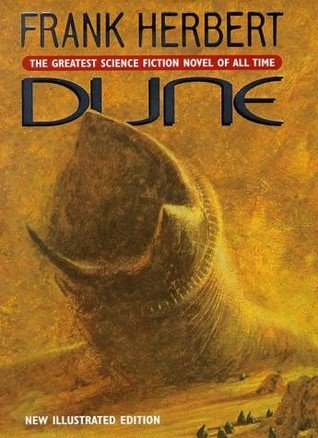
The second is the sandworm ride when they take the shield wall. It is exceptional storytelling, the point where every piece the novel has built starts moving at once, and it is the image the whole series gets remembered by for good reason. The films have their own version of the desert and it looks tremendous, but the shield wall belongs to the book.
Sixty years on it still holds up better than most of what came after it. It won the Hugo and the first ever Nebula Award for Best Novel, and if you have only met this universe through a cinema screen, the novel is where the ideas actually live. If you want the same era of writers wrestling with religion and politics at a similar pitch, Stranger in a Strange Land and Starship Troopers sit on the same shelf, and Leviathan Wakes is the modern series that inherited the interest in resource politics over laser battles.
Rating: 5/5.
