
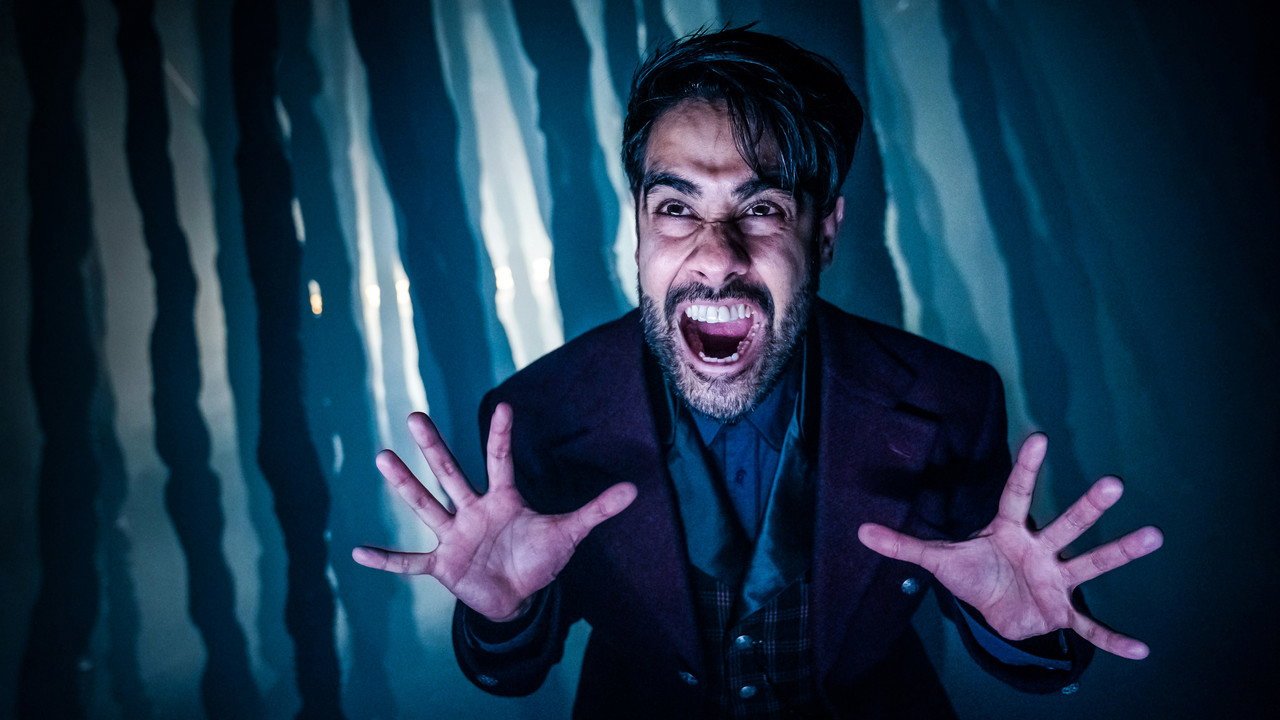
The first half of “Spyfall” is the best forty-five minutes Chris Chibnall has put his name to. It moves, it’s funny, it looks expensive, and it ends on the single most effective sting of the Whittaker era, with a man the Doctor has trusted all episode shrinking her friends’ plane out of the sky and announcing that he is the Master. After a year of villains who shuffled and threatened and did very little, Series 11 suddenly had a sequel with teeth. Part Two has to pay that off, and it mostly doesn’t. What it does instead is hand Sacha Dhawan enough room to establish himself as the best thing in the era, drop one line that will define the next two years of the programme, and let the actual thriller drain quietly away through a hole in the floor.
Three centuries and a lot of walking
The structure is the problem. The Doctor spends the episode bouncing through history after escaping the Kasaavin dimension, landing first with Ada Lovelace in 1834 and then with Noor Inayat Khan in occupied Paris in 1943, while the fam are stranded in the present trying to work out what Daniel Barton is doing. Two separate stories, neither of which has quite enough in it, cut against each other for the full runtime.
Both historical women are well cast and well played. Sylvie Briggs makes Ada quick and impatient and entirely unbothered by a stranger falling out of nowhere, and Aurora Marion gives Noor a wariness that the script earns by putting her in genuine danger from the Gestapo rather than from anything alien. There’s a good idea sitting in the middle of it, that the Master has been threading himself backwards through human history and using these women’s work as stepping stones. It never quite becomes a plot. They help the Doctor because the Doctor needs help, and then the episode is finished with them.
What’s genuinely uncomfortable is the goodbye. The Doctor wipes both women’s memories of everything that happened, which the script treats as housekeeping and moves past in about fifteen seconds. Ada Lovelace and Noor Inayat Khan spend an episode being braver and cleverer than anyone around them, and their reward is having it taken out of their heads by the person they helped. The show doesn’t pause on it. Given how much time Rosa spent insisting on the importance of remembering historical women properly, doing this fifteen months later without comment is a strange note to land on.
Meanwhile Graham, Ryan and Yaz are having a fine time on a plane and then in a car and then in a warehouse. Bradley Walsh gets the best gag of the hour with his laser shoes, and the three of them have settled into an easy rhythm by now. But they’re marking time. Barton’s scheme, which involves harvesting humanity as data storage for the Kasaavin, is explained rather than dramatised, and the man himself is dispatched with so little ceremony that he simply drives off and is never dealt with. He is still out there at the end of the episode and the show never mentions him again.
There is also a tonal problem the episode never solves. Part One was a Bond pastiche and knew it, all dinner jackets and car chases and a villain monologuing over a laptop. Part Two keeps the furniture and drops the fun, so you get earnest scenes about the Nazi occupation of Paris sitting next to gadget gags and a man with laser shoes. Neither mode is bad on its own. Together they keep tripping each other up, and the episode never decides whether it wants to be exciting or serious, so it ends up being neither for long enough to matter.

Dhawan is the reason to watch
Everything good here is the Master, and it’s worth being specific about why he works when so many of this era’s antagonists haven’t.
Sacha Dhawan plays him fast and brittle and genuinely unstable, snapping between delight and fury inside a single line, and the performance has a wounded quality that previous versions mostly kept hidden under charm. Missy was amused by the Doctor. John Simm’s Master was performing for an audience. This one is hurt, and he wants her to know exactly how much, which makes him unpredictable in a way that generates real tension whenever he’s on screen. His introduction in Part One works because Dhawan spends the whole first half being pleasant and helpful and slightly ingratiating, so the turn lands as a betrayal rather than a costume change.
He also, crucially, does things. He shrinks people into small piles on the carpet. He walks into a Nazi-occupied city as a British agent and dares an SS officer to look too closely, which is the single most nerve-shredding scene of the season and one that trades entirely on Dhawan’s ability to look like a man enjoying his own risk. Compare that to Tim Shaw shuffling around an asteroid in The Battle of Ranskoor Av Kolos and the difference is obvious. A villain needs to be capable of surprising you.
And then he delivers the line the whole era pivots on. Gallifrey is destroyed, burned by his own hand, because of something he found in the Matrix. Everything the Doctor knows about herself is a lie, and the lie is buried in something called the Timeless Child. As a hook it works. But the way it’s played here, with the Master almost begging her to understand why he did it, is the strongest scene between these two characters in years.
What the season is now
By the end of this episode Series 12 has done something Series 11 pointedly refused to do, which is commit to an arc. Gallifrey is gone. The Master is loose. There’s a mystery in the Doctor’s past with a name attached to it. Whether that’s an improvement depends on where it goes, and the destination is the problem rather than the journey.
For now it’s a genuine improvement on last year’s approach. The show has something to pull you through the season with, and the first two episodes have been more confident, better shot and considerably better paced than anything in the previous run. There’s a swagger to the pre-titles sequence, all sports cars and shootouts and Bond pastiche, that suggests a production team who have relaxed. The official site leaned hard on the spy angle in the run-up and for once the marketing wasn’t overselling.
What it leaves behind is Sacha Dhawan, playing the Master as a raw nerve rather than a showman, easily the best casting decision of the era. It leaves two historical women who were brave and clever and had it wiped out of their heads as a tidy-up. It leaves Daniel Barton driving away from his own plot and never being spoken of again. It leaves a spy thriller that opened brilliantly and then wandered off into a corridor. And it leaves the Timeless Child, four words in a burning city, which the show has now committed to explaining.
Rating: 2.5/5. A first half I’d rank with the best of the modern show, and a second half that squanders the momentum on two half-stories and a villain who escapes by driving off. Dhawan is superb and the Gallifrey material has real weight. Everything around them is a runaround. The plane goes down, the Master takes a bow, and the episode never quite recovers its footing.
