Very different take and a very different story here, even with nearly the same title on the cover. I Summoned Their Replacements is the second “betrayed by the hero’s party” series I’ve picked up this year, and where the other one (the Borgy60 series I reviewed book one of back in September) is a ci’dozy repairman story, this one is a proper dungeon-grinding revenge LitRPG. And I loved it. Five stars on Goodreads, rough bits and all.
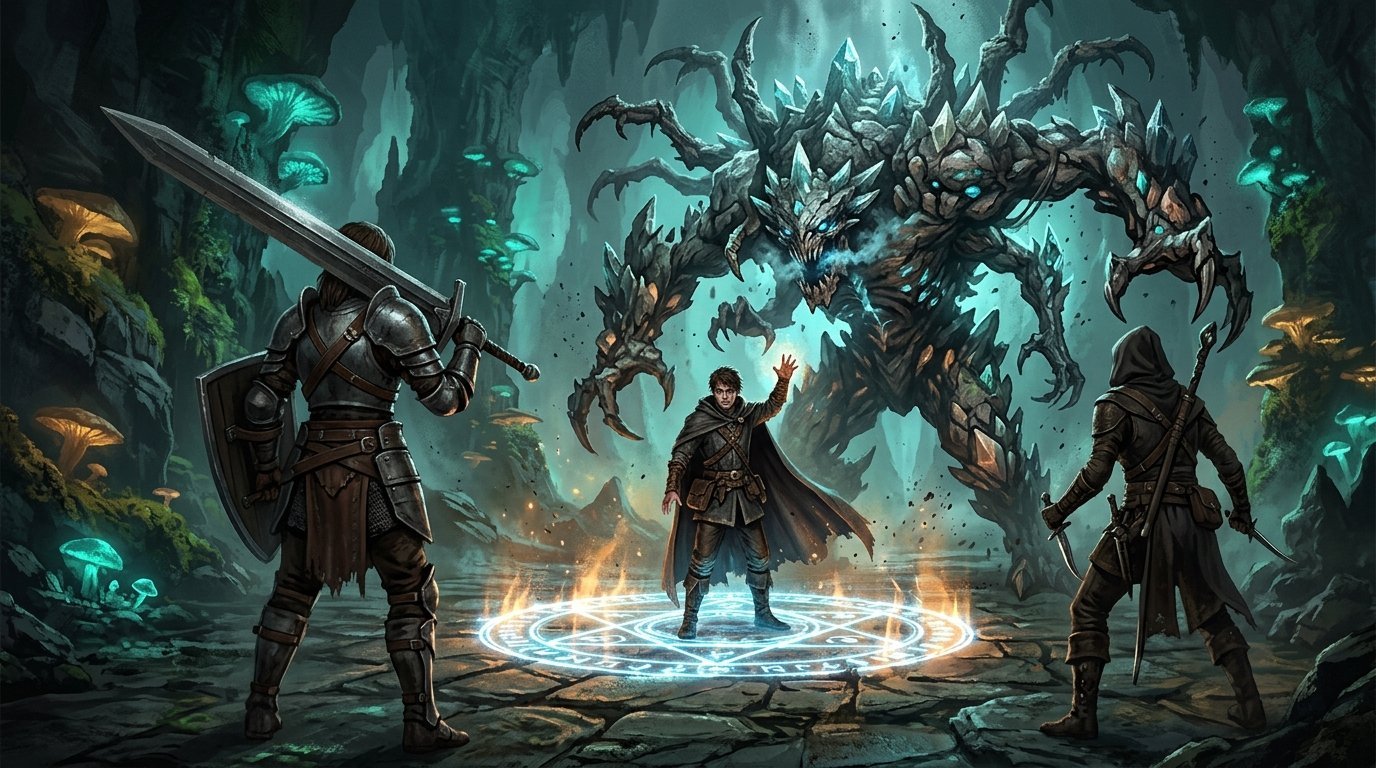
The hook is simple. Reed is a level-19 summoner whose Random Summon skill is a running joke in his party, the kind of skill that pulls a wooden chair out of thin air in the middle of a boss fight, and for two years they treat him like a pack mule, skim his loot and knock him around. Then the Hero buries him alive in a collapsing dungeon and reports him dead. Down there the skill finally evolves, and instead of furniture it starts reaching into the past for legendary fighters pulled from the moment before they died, plus the odd item he badly needs, and they bind themselves to him. From there it’s about surviving, levelling and working his way back toward the people who left him in the dark.
Reed isn’t the strongest person in the room, and that’s why it works
What sold me is that Reed is not automatically the strongest guy in the world the second his skill evolves. He’s still level 19. His summons are strong, but he has to keep them alive and keep himself alive, and the only way to get stronger is to go and challenge dungeons, over and over, and actually grow into the power over time. So you get a real climb. I watched him go from 19 to 40 across the book with the help of his summons, and by the back half he’s become very dangerous, but it felt earned because I’d been there for the fights that got him there.
That’s a big deal for me in this genre, because the lazy version of a betrayal story hands the main character everything in chapter three and then spends the rest of the book letting him be smug about it. This one doesn’t. Reed needs his party, he needs gear, he needs to pick his fights, and when a dungeon goes wrong it genuinely goes wrong. It’s much closer to the summoner-grind feel of Hell Mode than to an overpowered-from-page-one fantasy, where the fun is the planning and the slow build of the roster rather than just watching someone win.
And the summons themselves have a bit of weight to them. They aren’t just stat blocks. Each of them died badly in their own time, one holding a gate on her own for hours, one assassinated by her own council, which gives her something in common with Reed straight away, and that history makes the party feel like people who’ve got their own reasons for sticking around rather than tools he’s picked up.

The dungeons are the best part
The dungeons themselves are quite unique, and honestly this is the thing I’d tell people about first if they asked me why they should read it. So many LitRPGs have the same dungeon: goblins, then bigger goblins, then a goblin with a crown. The mobs and bosses here are interesting and properly weird compared to the norm in the genre, the kind of thing where you want to know what’s on the next floor just to see what it’ll throw at him. That’s the same itch Dungeon Crawler Carl scratches for me, floors that feel designed rather than filled in, and it’s a big part of why I tore through this one. It also means the levelling never gets stale. Every jump in Reed’s level lines up with a fight I actually remember, against something that wasn’t just a reskin of the last thing he killed, so the numbers going up actually mean something rather than being a counter ticking over in the background.
Then the Hero’s party works out that the assassination didn’t take. Instead of turning up themselves they send their tank to clean up the mess, and by then there’s an eight-level difference between Reed and the man sent to finish him off. Eight levels turns out to not be enough. Reed doesn’t just beat him, he kills him, and after two years of being the party punching bag it’s a really satisfying moment, the first name crossed off and a clear signal of where the rest of the series is going.
The rough edges are still there
Now, this one is also obviously written at least partly by AI. I’m not going to pretend otherwise, and if you read my take on the other Betrayed series you’ll know it’s something I notice. The difference is that this one has been edited and cleaned up a lot better. The prose mostly gets out of the way of the story, which is all I really want from it.
Mostly. There are still continuity issues and gaps where scenes jump around for no reason. He’s in the forest after clearing a dungeon, then he’s in the inn with his party, then he’s back in the forest again, and it happens often enough that it should have been caught before this went out. There are also sections that sound very similar to the other Betrayed by the Hero’s Party books, with that same very declarative, repetitive style creeping back in for a few pages at a time, where every line lands like a statement of fact and then the next line says it again slightly differently.
Would I rather it didn’t have those problems? Obviously. But they’re bumps, and the story kept pulling me past them. The difference between this and the other Betrayed series is that when the prose wobbles here there’s a genuinely good book underneath it doing enough to carry me through, a hero who has to fight for every level and dungeons I actually wanted to see the end of.
Rating: 5/5. Loved it. Some messy scene jumps and a few patches that sound like a machine wrote them, and I didn’t care one bit by the time the tank showed up.
