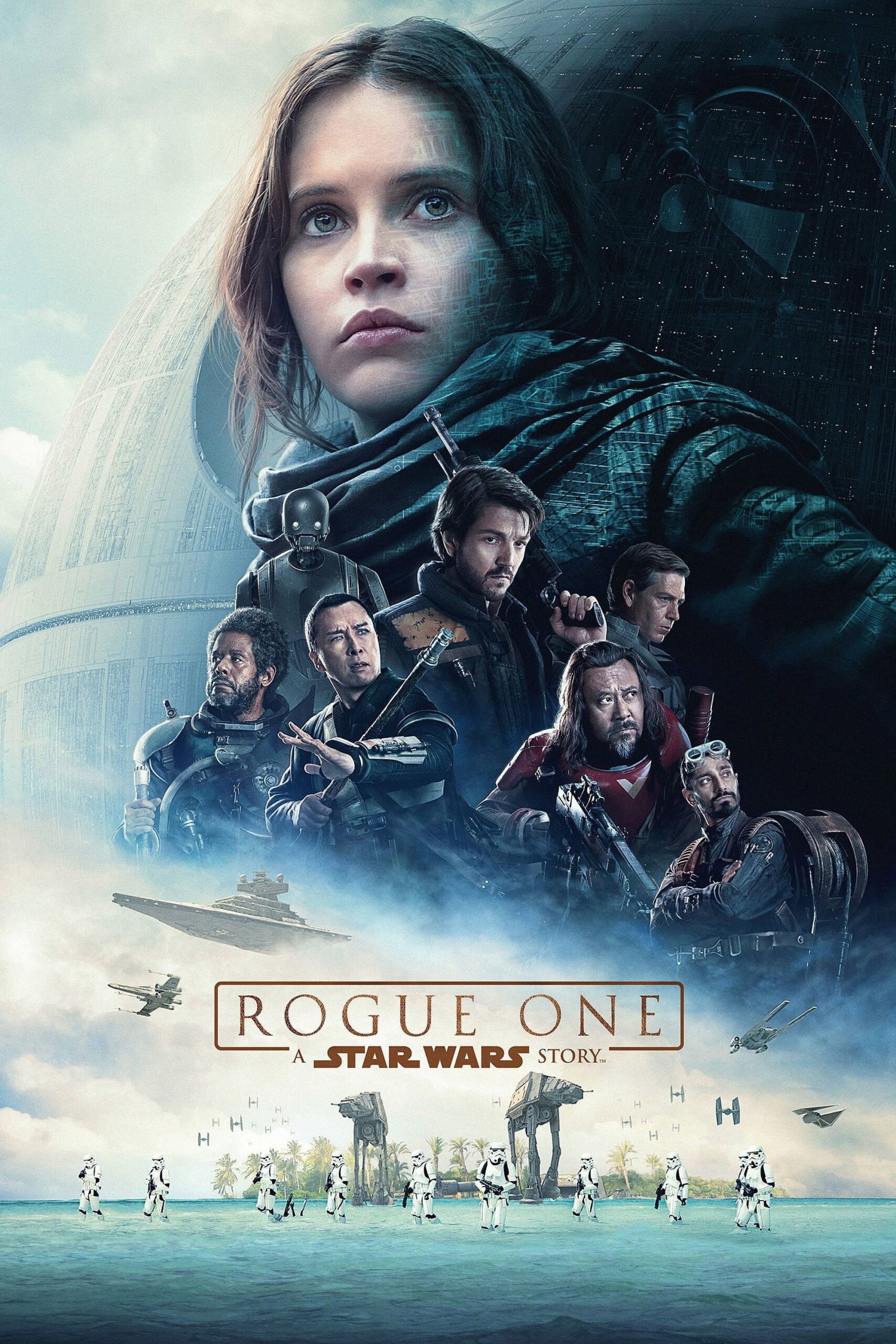
My Rogue One review is a 3.8, and I mean that as a compliment to the film. It’s much better overall than The Force Awakens, mainly because it has an interesting story: namely, where did the Rebels get the plans, and how did it all happen? I’ve watched A New Hope a lot of times and never really stopped to wonder, and having it answered like this was a smart idea. It was really good overall, and I came out of the cinema thinking Disney had done something right. It’s the first Star Wars story that isn’t about the Skywalkers, and it’s a good sign for the ones that might follow.
Galen, Jyn and the Death Star
The setup follows an engineer called Galen Erso, who gets taken away by Director Krennic to finish building the Death Star. His daughter Jyn grows up in the care of a rebel extremist named Saw Gerrera, and years later the Rebel Alliance goes looking for her after a pilot defects with a message from Galen. That’s a good hook, because it means the story is about her getting dragged back into a fight she wanted no part of. She ends up with Captain Cassian Andor, an intelligence officer who’s done terrible things for the cause, and the sarcastic droid K-2SO, who steals nearly every scene he’s in.
The rest of the team is a mixed bunch, with a blind monk called Chirrut and his friend Baze, who’s the muscle, and a pilot called Bodhi who defected from the Empire. They find out that Galen built a flaw into the Death Star, and then the rebels decide not to act, so Jyn’s group steals a ship and goes anyway. I liked that nobody in the group is a typical hero. They’re not Jedi, they’re not royalty, they’re a crew of misfits who’ve all got something to lose, and that makes it feel a lot more like a real war. Misfit crews are having a moment, with Guardians of the Galaxy and Suicide Squad both built around them.
The crew
What I liked about the group is how different they all are. Jyn is the reluctant leader, someone who’s spent most of her life on her own and doesn’t trust anyone else’s cause. Cassian is the intelligence officer who has done things he isn’t proud of for the Alliance, and there’s a tension between him and Jyn that stays unresolved for a good chunk of the film. K-2SO is a reprogrammed Imperial droid with a dry, sarcastic voice who’s always saying the thing nobody else will. Chirrut and Baze are two old friends from a temple on Jedha, one of them blind and calm, the other grim and heavily armed, and they look after each other. And Bodhi is the pilot who walked away from the Empire and took a message with him.
It’s a big cast, and the film doesn’t have time to give everybody much, but each of them has a moment. I never got confused about who was who, and by the end I cared about all of them. That’s a hard thing to pull off in a film this size.
Jedha, Eadu and the mission
The first half is a trip around the galaxy, and each stop adds another piece to the puzzle. On the desert moon of Jedha, once a holy city for people who worshipped the Force, Jyn and Cassian meet Saw Gerrera, the extremist who raised her, as well as Chirrut and Baze, who join the group. The Empire is mining the place for the crystals that power its new weapon, and the city is a rubble-strewn war zone, with troops everywhere and rebels fighting back. It’s a strong sequence, grim and dusty and tense, and it shows what the war looks like on the ground.
Then the trail leads to Eadu, where Galen is working, and where the rebels turn up with a plan of their own. Cassian has been given an order that he doesn’t like, and Jyn finds out about it, and the two of them clash. It’s a good bit of drama, with the two characters pulled between what they’ve been told to do and what they know is right. Galen is killed in a rebel attack, and Jyn has to carry on without him. That’s what turns her from a reluctant passenger into someone who’ll do whatever it takes, and the whole film hinges on that change.
A war film with Star Wars in it
What makes it work is the way it plays like a war film. The mission to Scarif, where the plans are held, is a proper battle, with troops on the beach and ships overhead, and you can feel how much is at stake. It’s bleaker than anything we’ve had in a long while, and I liked that. Arrival was the other recent sci-fi film that wasn’t afraid to be sad. It fits right in with how the first film starts, which is the best compliment I can give it. There are ground fights on the sand, X-wings and U-wings swooping through the air, and a space battle going on above it all, and every part of it feels like it matters.

Krennic is the villain on the ground, an ambitious Imperial director who’s desperate to be seen as the man who built the Death Star, and he’s up against the people above him as much as against the rebels. When the Death Star finally arrives, in the middle of the battle at Scarif, and fires on the rebel base, it’s chilling. You see it hang there, a huge round moon looming over the sea, and you know it’s about to ruin everyone’s day. That’s the film at its most dramatic, and it’s the shot I’ll remember longest.
I did think the sequence with Chirrut, the blind monk, managing to walk through all those soldiers was a bit lame. It’s meant to be a big moment, and it made me roll my eyes, because nobody gets through a crowd of troopers shooting at them without a scratch. That was the one moment where I stopped believing the film. It’s a small thing, and the rest of it carried me past it easily.
Not everyone gets out
The thing I liked most is that the heroes don’t all survive. It’s good that they don’t all make it, and the crew dies one by one on Scarif, with Jyn and Cassian sending the plans out before the Death Star gets them. A lot of films would find a way to save everyone, and this one doesn’t, and that’s what makes it feel like something happened. It’s a really good story and a really good idea. Good on Disney. Galen is killed by rebel bombs earlier on, and Jyn is the one who has to carry his message forward, and by the end it’s clear that what she’s done matters.
The way the deaths are spread across the battle is what makes it hit. Each of them dies doing a job, whether it’s holding a door, flipping a switch, or climbing a tower, and the plans only get through because every one of them does what’s asked. By the time Jyn and Cassian are standing on the beach together at the end, watching the glow of the Death Star’s blast coming in, there’s a quiet that’s different from anything the series has done before. It isn’t a victory in the usual sense, but it’s a win, and it’s the sort of ending that gets under your skin.
Vader turns up at the end on the Rebel ship, which makes the whole thing feel like part of the same story. The corridor scene where he cuts through the Rebel soldiers trying to hold the door shut is a real treat, and it ties the film to the original trilogy in the most satisfying way. The plans end up with Leia, and then the film ends moments before A New Hope begins. That’s what I wanted from it, and I got it.
What I made of it
What I liked is that it’s a different kind of Star Wars. It’s a war film, it’s got a rough, scrappy feel, and it takes its time with a group of people who aren’t heroes in the usual sense. It’s still got the ships and the blasters and the Death Star, and it’s clearly part of the same world, but it’s willing to be grimmer than anything we’ve had.
It’s much better than I expected, and it’s a lot better than the last film in the main series, which is a pleasant thing to say. The one scene that took me out of it, the monk walking through the soldiers, is a small thing next to the rest. I’d happily see more films like this, and that’s a good sign for whatever comes next. Rating: 3.8. Really good, and a pleasant surprise.
