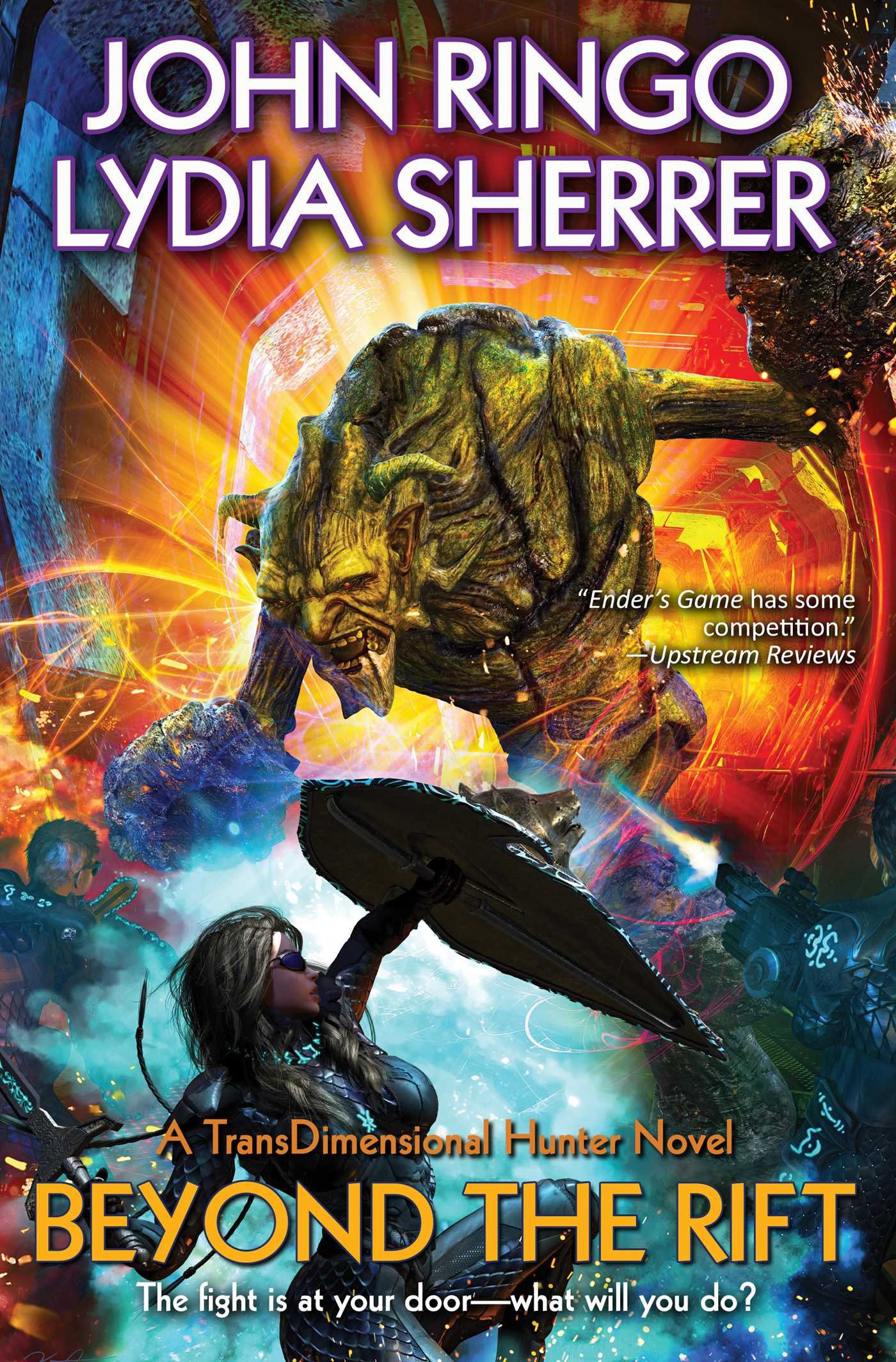
Four books ago this series started as a socially anxious teenager beta-testing an augmented-reality game. Beyond the Rift has to close out her identity crisis, her fame, the rival team, the stalker, the sabotage, and the actual mechanism behind the whole game, all in one book, because this is where the series ends. It mostly pulls that off. I enjoyed this one a lot, and there’s a genuine surprise late in the book that I didn’t see coming. But this is also a Ringo series finale, and Ringo finales have a shape I’ve seen before on this site: everything resolves, and it resolves fast, and you can feel the page count running out before the plot does.
That’s a strange thing to say about a book I’m rating this highly, but both things are true at once. The stuff that works, works because three books of setup earned it. The stuff that doesn’t quite work reads like a book that had more to close than the page count budgeted for. I’d rather end on that combination than on a finale that plays it safe and resolves nothing.
The stakes go all the way up
Whatever else is true about the pacing, this book doesn’t undersell what’s on the line. The countdown driving the back half is about as blunt as stakes get: in six months, the world ends if this doesn’t get fixed. That’s a long way from a beta test for an augmented-reality monster-hunting app, and the distance the series has traveled from book one to here is honestly the most satisfying part of reading it straight through.
The character arcs get their moment too, and this is the part I wasn’t sure a single closing book could manage. Lynn’s mother, the ER nurse whose shifts were the whole reason gaming for money mattered back in book one, gets real closure rather than a mention in passing. Even Elena, the rival who ran the mean-girl antagonism all the way back at the start, gets a real scene instead of just fading out of the story once she stopped being useful as an obstacle. Even the teammates who spent book two eaten up by jealousy get somewhere better than where they started. A finale that remembers every thread it’s carrying and gives each one a real beat is rarer than it should be, and this one does that better than I expected going in.
That’s a genuinely hard needle to thread across four books and this many named characters, and it’s worth calling out on its own rather than just as a footnote to the plot. A lot of series finales pick two or three people to actually resolve and let everyone else exit on a wave and a nod. This one goes down the list properly, and by the time it’s done I couldn’t point to a single major character from the first three books who got shortchanged on their way out.
The reveal doesn’t throw her under the bus
There’s a point late in the book where everything Lynn has been managing, the game, the algorithm, the danger underneath the training simulator, comes out in the open in a way that could very easily have turned into a pile-on. I expected the narrative to make her the convenient scapegoat once the full picture landed, the teenage fall guy for decisions bigger institutions made long before she was ever recruited. It doesn’t do that, and I was genuinely surprised by how the book handles it.
This is a series that has spent three books putting the consequences of other people’s decisions onto a teenage girl, from Ronnie’s dismissive friend group in book one through the doxing and stalking in the two after it. Watching the story actually protect her for once, at the exact moment it would have been easiest to make her the fall guy for the drama, carries more weight than it would in a book that hadn’t put her through everything the first three did first. She doesn’t get thrown under the bus, and that restraint is the single best decision this book makes.
It would have been the easy version of this scene to write. Teenage girl, corporate secret, global crisis: the setup all but hands you a scapegoat plot on a plate, and after three books of Lynn absorbing blame that was never hers to carry, I’d have believed it if the story had gone there one more time. That it doesn’t is the moment I trusted the book to actually land the rest of its ending, even in the places it didn’t quite manage to.
Loose ends that never get tied off
Two things bothered me enough to notice on a single read, which is unusual for this series. Lynn has a boyfriend by this point in the story, and at a key moment he knows something he has no reasonable way of knowing. The book never explains how he found out. It’s just true in one chapter, and I kept waiting for the scene that connects the dots between what he knew before and what he shouldn’t have. It never arrives.
The bigger loose end is the rift itself, the thing the title is named for. It doesn’t get a clean resolution. I finished the book honestly unsure whether that’s a deliberate door left open for a fifth book or a thread the authors ran out of room to close properly. Given how everything else about this ending closes, I’d bet on the second, but I’d genuinely like to be wrong about that.

Four books is enough runway to set up a real payoff for both of these, and neither one gets it. It reads less like an intentional mystery and more like a note nobody had time to go back and fix before the deadline. I’d have taken either answer happily: explain the boyfriend, or leave the rift open on purpose and tell me so. What I don’t love is getting neither, in a book that otherwise closes almost everything else it opened across the first three volumes.
The teen-romance padding, and one scene that doesn’t land
There’s a broader looseness in how the teenagers on this team talk to and around the adults in their lives that reads a little off through this whole book, like the dialogue forgot there’s supposed to be a generational line there at all. The romantic subplot is part of that. It gets more page time here than it’s earned across four books, and by this point it reads like the series checking a box rather than developing anything new. I’d have traded a chunk of it for more room spent on the actual finale mechanics, which are the part of this book that needed the space.
The clearest example of the bigger problem is a scene where one of the eighteen-year-olds on Lynn’s team starts hollering at a woman in her forties for getting kissed. It’s played as a beat, not a joke and not really addressed as a problem afterward, and it just reads wrong. An eighteen-year-old yelling at an adult stranger about her own romantic life isn’t protective and it isn’t funny. It’s crass, and the age gap between who’s doing the judging and who’s being judged makes it worse rather than better. It’s a small scene in a long book, but it’s the moment where the teen behavior around adults stopped feeling like teenagers being teenagers and started feeling like the book forgot how adults and teenagers actually talk to each other.
The ending Ringo endings always have
I’ve said this about a Ringo series before: Troy Rising stuck its landing and then got heavy-handed about the politics on the way there. This series has close to the opposite problem. It doesn’t overstay its welcome and it doesn’t get preachy. It just doesn’t stay long enough. Four books of buildup, real stakes, and a genuinely dark turn in Behind the Veil, and then the actual ending arrives compressed into a fraction of the space it needed to breathe.
That’s not unique to this series, either. It’s close to endemic in how Ringo closes things out, from what I’ve read of his work on this site: the middle stretches get room to develop, and the finale gets rushed to the line as if the deadline landed before the outline did. Compare the ratio here. The romantic subplot and the teen-adult scenes get roughly as much page time as the actual closing of the central mystery, and only one of those needed that much room to work.
It’s the one criticism I’d make of the series as a whole rather than of any single book in it. Three books spent this much time getting Lynn, her team, and the actual threat to a boiling point. The fourth owed the ending at least as much patience as the other three got, and it doesn’t quite deliver that.
4.2 out of 5
I really enjoyed this one, loose ends and all. The reveal is handled better than I expected, the character work I liked in Into the Real and Through the Storm pays off here instead of getting dropped for spectacle, and Lynn earns her ending. It’s just an ending that needed another hundred pages to actually land the way the rest of the series set it up to.
