
“The End of Time, Part One” is the first half of David Tennant’s final story as the Tenth Doctor, in which the Master is resurrected wrong, burning through his own life force, and the Ood warn the Doctor that something far worse is coming. Wilfred Mott becomes the Doctor’s companion, and the Master uses an alien device called the Immortality Gate to turn every human on Earth into a copy of himself.
The review singles out a café scene between the Doctor and Wilf as the finest of the era and enjoys the payoff of the Master’s drumbeat, while finding the “Master Race” plot tonally all over the place. It rates the episode 4 out of 5.
Everything this era has been building towards starts arriving here. “The End of Time, Part One” is a strange, lurching, tonally chaotic hour that swings from a resurrection ritual in a prison yard to a pensioner surveillance operation to six billion people turning into the same man. Somewhere in the middle of it there’s a two-hander in a café that is, I think, the finest scene David Tennant has ever been given. It’s the first half of a two-part Christmas send-off for the Tenth Doctor, and it brings back the Master and, much more surprisingly, the Time Lords. I didn’t see that last part coming at all.
The Ood are dreaming
It opens where the warnings have been pointing. The Ood summon him, Ood Sigma, who told him his song was ending in Planet of the Ood and was standing silently in a suburban street the last time we saw him, and the Doctor arrives having spent months running the other way. The Ood have evolved too fast and they’re dreaming, and time is bleeding. They show him images of a man he watched die in his arms, and of something worse behind him. Whatever’s coming has already started, and for once the Doctor is late.
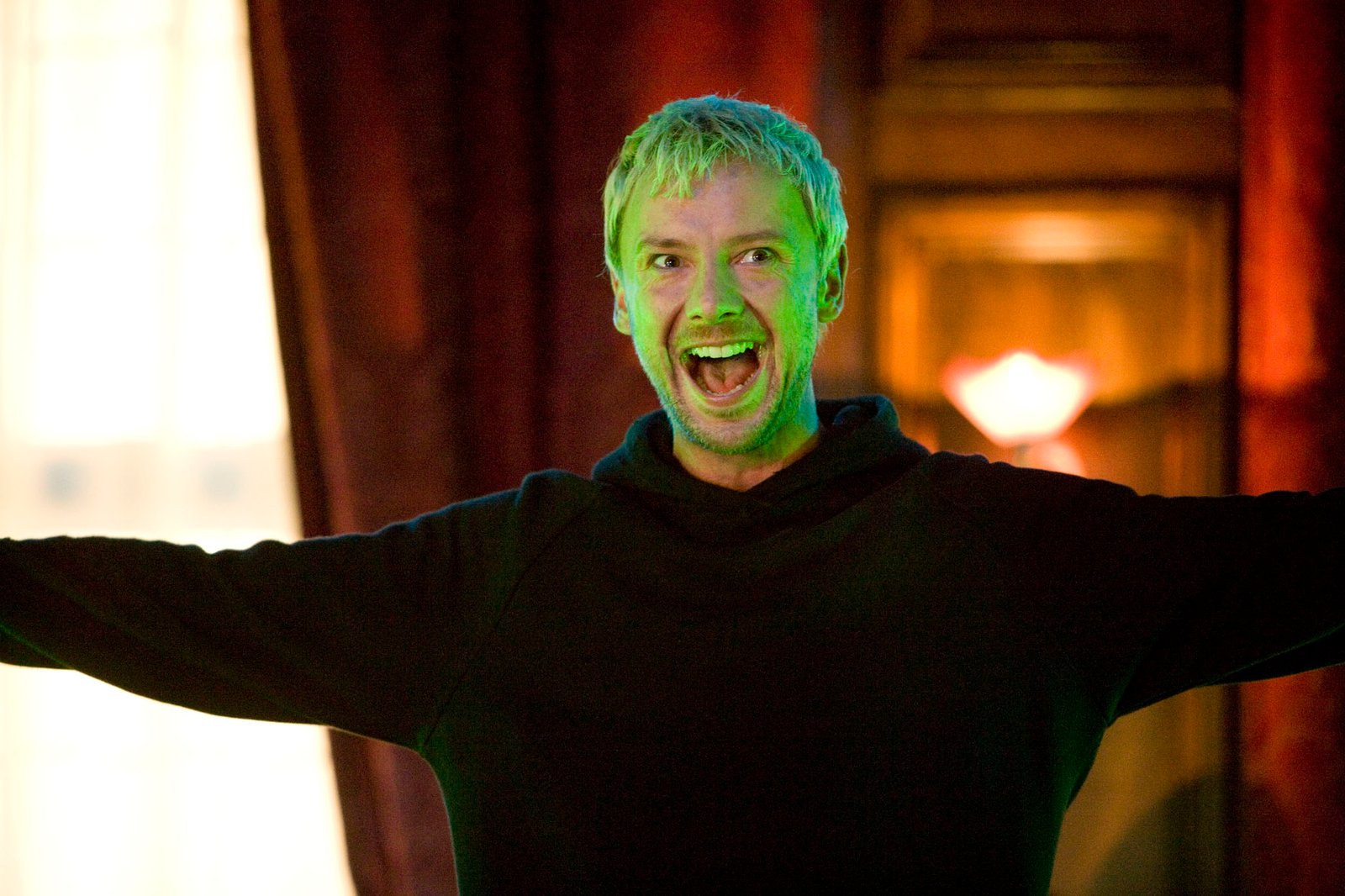
The Master comes back through a genuinely nasty piece of cult business, a group of disciples, a stolen biometric imprint and a ritual that his widow Lucy sabotages at the critical moment. He died refusing to regenerate at the end of Last of the Time Lords, and he returns wrong: burning through life energy, his skull flickering visible beneath the skin, ravenous to the point of eating out of bins. John Simm plays him as something closer to a starving animal than the giggling politician of The Sound of Drums, and it mostly works. I loved that he can use his life force as a weapon, and even as a way of throwing himself across the landscape, and the skull effect is brilliant. The super-powered leaping over buildings does tip into silliness, but what lands is the desperation, because this Master is dying and he knows it.

The drumming in his head, the four-beat rhythm he’s complained about since he first arrived, turns out not to be madness at all. It’s a signal, and someone put it there. I love it when a series is able to tie a single plot device back to something so much larger, and I have to give them credit for clearly mapping it out in advance. It turns a character quirk from years ago into the key to the whole story. That’s the kind of long game this show doesn’t always play, and it’s very satisfying when it does.
The café
Donna, meanwhile, is engaged. She’s marrying a decent, ordinary man called Shaun, she’s happy in the small way she was always allowed to be, and she hasn’t the faintest idea that she once saved every universe there is. The Doctor watches her from across a street and doesn’t go over. Sylvia and Wilf carry the secret between them like a shared wound, and Wilf’s quiet fury about it, that this extraordinary woman has been made small again and isn’t even allowed to know why, is the angriest the show has ever been about one of its own endings. Wilf has also assembled a squad of pensioners to comb London for the Doctor, which is exactly as funny as it sounds.
When he finally corners him, the two of them sit down in a greasy spoon and talk, and the episode stops dead for ten minutes to do the best thing in it. The Doctor tells him what regeneration actually means, not the cheerful version but the truth: that some new man goes sauntering away wearing his face and his memories, and as far as he’s concerned, that’s dying. Tennant plays it with tears running down his face and no self-pity at all, and Bernard Cribbins simply listens, an old soldier who’s been near enough death not to argue with anyone about it. What makes it land is that Wilf doesn’t try to fix it. He takes it seriously, offers him a service revolver and is refused, and there’s no music under any of it because it doesn’t need any.
It reframes the whole run of specials. The arrogance in The Waters of Mars, the refusal to take anyone with him, the running: it’s all a man who’s been told three times that his song is ending and can’t bear it. He isn’t being noble. He’s terrified, and the café is the first time he admits it out loud. It makes everything that came before it hurt a little more in hindsight, and it’s why I’d put this scene above anything else in his time on the show.
The Master race
The plot proper is the maddest thing the show has attempted. A wealthy man named Naismith has acquired an alien medical device called the Immortality Gate and hires the Master to repair it, on the reasonable assumption that a genius in chains is still a genius. The Gate rewrites a template across an entire species at once, so the Master steps into it and broadcasts himself. Every human on Earth, every commuter, newsreader and member of the cabinet, becomes John Simm, grinning, in their own clothes. It’s audacious and very funny for about ninety seconds, but I have to say it felt very Matrix to me, like watching Agent Smith copy himself into everyone, and the novelty wears off fast.
Two people are unaffected. Wilf, because he happened to be inside a shielded booth, and Donna Noble, because the mind she isn’t allowed to remember is still in there protecting her, the meta-crisis from Journey’s End doing exactly what the Doctor said it would if anyone disturbed it. It’s a lovely payoff, and a worrying one. It’s also the moment the story reminds you what it cost Donna to be forgotten. Of all the threads in this episode, that’s the one I cared about most.
Rassilon
And then the cliffhanger, which is enormous. We cut away from Earth entirely, to the last day of the Time War and a chamber of robed figures in enormous collars. The Time Lords aren’t gone. Rassilon and the High Council have worked out a way back, and the drumbeat in the Master’s head, planted across his whole life, is the link they mean to use. Being the last of the Time Lords has shaped everything about this Doctor, and the thought of them returning genuinely stopped me in my tracks.
The narration is a nice touch as well. The whole episode is framed by an unseen voice warning that this is the day the human race ends, and the reveal that it belongs to the Lord President, with Timothy Dalton giving it everything, is a great surprise. It makes the opening look completely different in hindsight. It’s the kind of trick this show does brilliantly when it bothers.
The show is careful about how it plays it, too. A lesser version would have staged the Time Lords’ return as salvation, the Doctor’s lost people coming home at last and ending his loneliness. Instead the reveal is shot like the approach of something monstrous, all shadow and scale and dread, and the only clue we get as to why is the look on his face when he understands what he’s looking at. Whatever he did at the end of that war, he did it for a reason. It’s the most frightening cliffhanger the show has managed, precisely because the Doctor’s reaction is horror rather than joy.
Rating: 4/5. Baggy and frequently ridiculous, with a middle act that’s more concept than story and a Master Race that felt a bit too Matrix for me. But the café scene is extraordinary, the drumbeat payoff is brilliant, and the dread is genuine all the way to the end. It earns its cliffhanger completely.

1 comment
[…] cliffhanger from Part One pays off immediately, and the answer to the great outstanding question of the revived series turns […]