
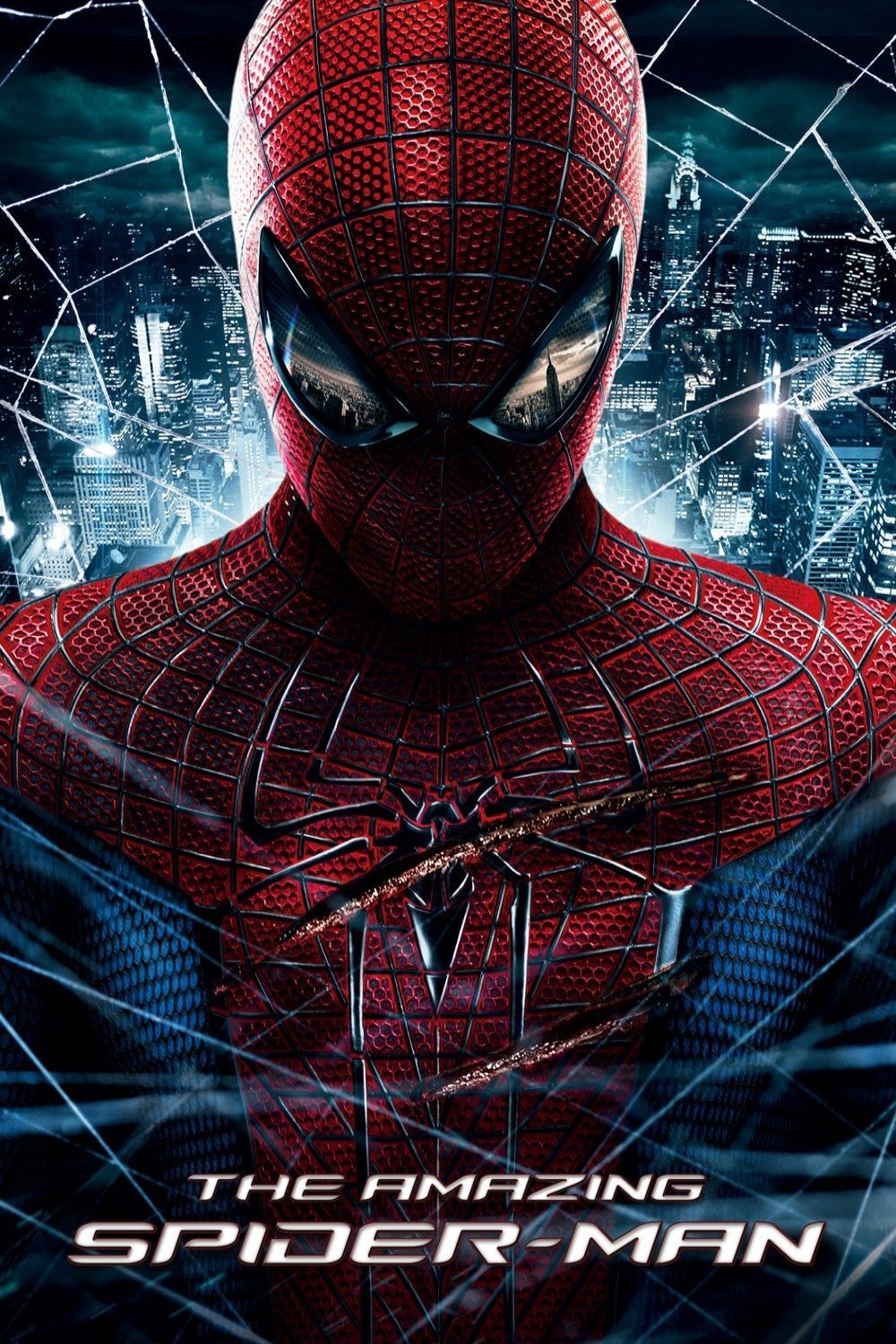
Spider-Man’s back on a cinema screen, and honestly, that was most of what I needed. The Amazing Spider-Man isn’t the film I’d have built if somebody handed me the keys, but I came out of it grinning, and I wasn’t at all sure I would.
Here’s why the bar was sitting where it was. Sam Raimi’s third film landed in 2007 and left a taste that never really went away. I said at the time that Spider-Man 3 had too many villains and not enough film, and five years hasn’t softened that at all. There was supposed to be a fourth one. It collapsed in 2010, and what turned up instead was a full reboot with a new lead, a new director, and the origin told all over again. Five years is not long to wait before retelling a story everybody in the building already knows by heart. I went in annoyed.
A younger Peter, and finally something close to a kid
Andrew Garfield is the best argument this film makes for itself. He’s playing a genuinely younger Peter Parker than Tobey Maguire ever did, and that matters more than I expected. Maguire’s Peter always felt like a slightly sad adult wearing a school uniform, which worked for what the 2002 film was doing but never quite convinced me he was seventeen. Garfield isn’t the teenager I’ve been waiting for either, not exactly, but he’s a lot closer to the mark. He’s twitchy and rude and defensive in the way actual teenagers are, and he skateboards through the school corridors like someone who hasn’t worked out yet that being unbearable is a phase. He plays sixteen. That’s the win.
The other thing he does that Maguire never got to is talk inside the mask. Spider-Man in the comics is a motormouth. It’s the whole character. He’s a kid who deals with terror by being annoying at it, and the Raimi films largely dropped that in favour of a quieter, more mournful Peter. Garfield quips at the car thief, quips at the cops, quips at the Lizard, and every time he does the film gets a little closer to the guy I’ve been reading about since I was a kid. It’s a small correction and it lands.
He’s also better in the mask physically. There’s a looseness to how this Spider-Man moves, an actual sense of somebody enjoying being able to do this, and Marc Webb shoots the web-swinging like it’s fun rather than like it’s a chore he has to get through to reach the next plot point. Den of Geek’s reviewer picked up on the same thing in their write-up of the film, and I think it’s the single clearest upgrade from 2002.
The web-shooters are mechanical, and it took ten years
This is the fix I’ve wanted since 2002 and I’m not going to pretend I’m above being pleased about it. Peter builds his web-shooters. He’s a science kid, he gets hold of Oscorp’s bio-cable, and he engineers the things himself out of watch parts and cleverness. Raimi made the webbing organic, part of the bite, and I understood the reasoning at the time. It’s simpler, it’s one less thing to explain, and it keeps the origin tight. I thought it was wrong then. I still do.
The reason it matters isn’t fanboy box-ticking. It’s that the web-shooters are the proof Peter is brilliant. Take them away and the bite gave him everything, and he’s a lucky kid with a good heart. Nothing more. Leave them in and he’s a genius who got bitten by a spider, which is a meaningfully different character, and it’s the version the comics have run with for fifty years. This film gets that, states it plainly, and then keeps paying it off. When he runs out of web fluid mid-fight, that’s a consequence the organic version can’t generate.
Emma Stone’s Gwen Stacy benefits from the same instinct. She already works at Oscorp when Peter meets her, she’s smarter than him in her own lane, and she’s the one who mixes the antidote in the third act while he’s busy getting thrown through things. She isn’t a prize to be rescued off a bridge. After two films of Mary Jane mostly screaming at the appropriate moment, having a lead who’s actively solving the problem is a real shift, and Garfield and Stone are so good together that the film keeps stopping to let them be awkward at each other. Those are the best scenes in it. Easily.
The parents rewrite is the bit I’m least sure about
This is a different universe version of the character in a way that goes past casting. Peter’s parents are scientists who vanish in the first ten minutes, leaving him with Ben and May because they had to run, not because of the accident that took them in the older telling. Richard Parker’s work is the spine of the whole plot. The spiders are his. Connors was his partner. There’s a briefcase, a hidden algorithm, and a mid-credits scene with a shadowy figure asking whether Peter knows about his father.
I don’t hate it. The intro sequence is different and it’s still perfectly acceptable, and giving Peter an absence to chase rather than only a guilt to carry is a legitimate way to rebuild an origin everybody can recite. It also gives him a reason to walk into Oscorp that isn’t a school field trip, which is more than 2002 managed.
What nags at me is that it turns Peter’s powers into something faintly inherited. The bite worked because it was random. A nobody from Queens gets hit by cosmic bad luck and decides to be good about it, and that’s the entire moral engine of Spider-Man. If the spiders were coded to Parker DNA and his father set all this up, then Peter isn’t an accident any more, he’s a legacy, and I’m not convinced that’s an improvement. The film’s careful not to close that door yet. I’d rather it didn’t walk through it at all.
Uncle Ben is handled well, mind. Martin Sheen is warmer and more present than the 2002 version, the argument they have before he dies is a properly nasty little scene, and the film sensibly doesn’t try to recite the famous line. Ben gets his own speech about people who need help instead, which is the same idea without the weight of a thousand parodies on it.
The Lizard is the problem
Here’s where it comes apart, and it’s the worst thing in the film by a distance. Curt Connors is fine as a man. Rhys Ifans plays the desperation well, and the setup with the missing arm and the borrowed algorithm does its job. The Lizard is a good Spider-Man villain in the general sense that he belongs in the rogues gallery and always has. He is not a tier-one Spider-Man villain, and I wouldn’t have given him a movie.
Compare him to what the first two Raimi films had to work with. Willem Dafoe’s Green Goblin is a genuinely unsettling piece of casting, and Alfred Molina’s Doc Ock carried the best of the three by a mile on the strength of being a tragedy rather than a threat. Both of those villains had something on Peter personally. The Lizard’s plan is to aerosolise a serum over Manhattan and turn everyone into reptiles, which is a Saturday morning cartoon plot delivered with a straight face, and the third act deflates the moment he commits to it. Empire’s review made much the same complaint and I think it’s the consensus for a reason. The CGI doesn’t help. He’s got a smooth, expressionless face that never sells Connors being in there somewhere. Nobody’s home behind it.
So four out of five, and I’ll be honest that some of that is just relief at having Spider-Man back where he belongs. It’s a fun, warm, well-cast film with a bad villain and one origin change I’m side-eyeing, and I enjoyed almost all of it.
One last thought, and it’s pure wishful thinking. The Avengers came out six weeks ago and it was amazing, and watching it work made me want something I know I’m not getting. Spider-Man is my favourite comic book character, full stop. Seeing him standing next to those people, in that universe, trading insults with Tony Stark, would be a dream come true. Two studios, two sets of rights, and no reason on earth for either of them to play nicely. But I’d love to be wrong about that.

1 comment
[…] who can’t shut up are consistently the most watchable stretches of the film. I said after the first one that giving Peter his voice back inside the mask was the clearest upgrade from the Raimi era, and […]