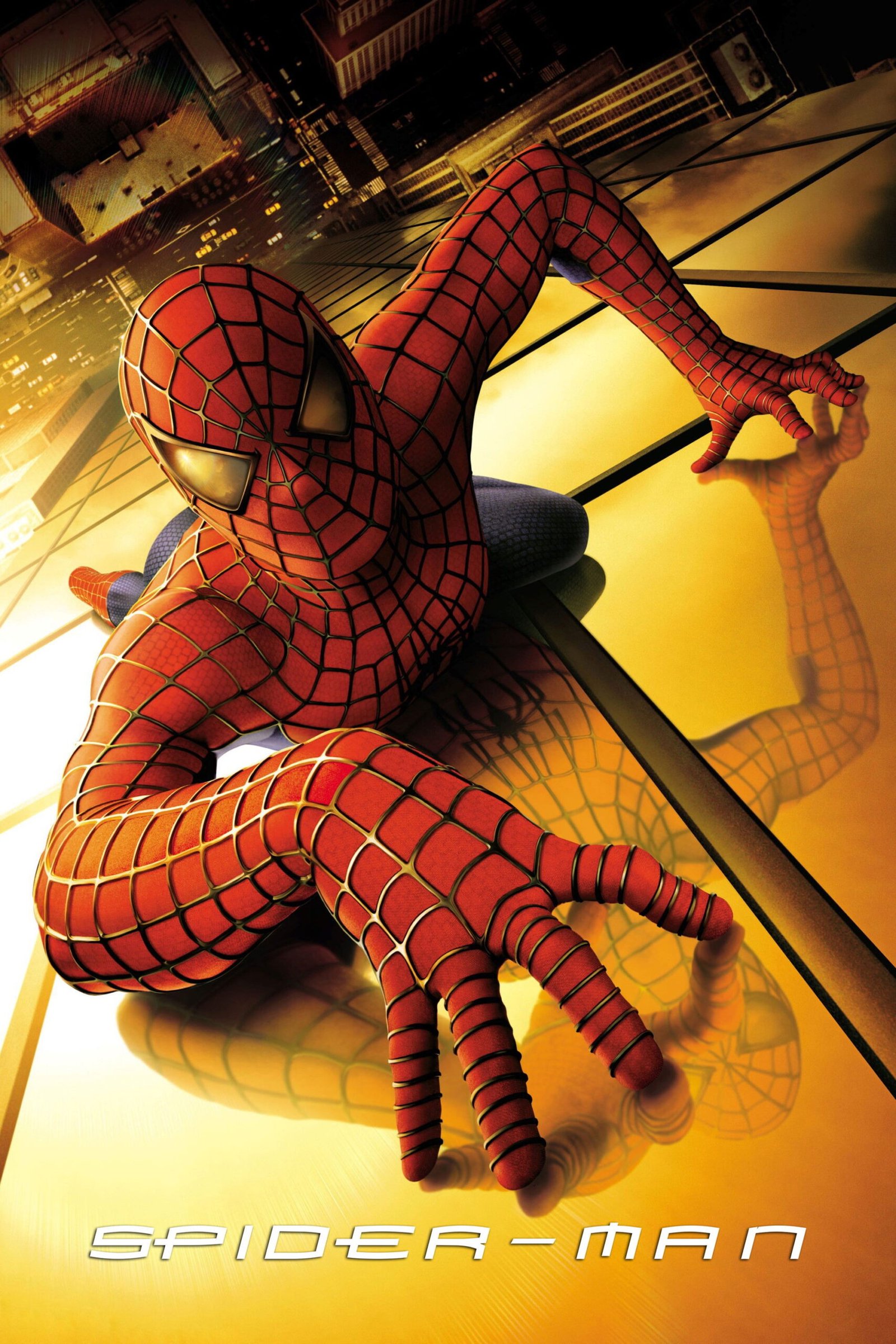
Raimi’s Spider-Man is the first comic adaptation that treats the source as something worth filming accurately rather than fixing. The wrestling match, the promoter short-changing Peter at the window, the robber he deliberately lets go and Uncle Ben dying for it are all shot close to how they were drawn, and the film understands that the guilt rather than the spider bite is the real origin. Willem Dafoe’s Norman Osborn is the standout, playing both halves of a man losing an argument with himself, and J.K. Simmons pitches Jameson exactly where the comics do.
The complaints are real but survivable. Maguire and Dunst are visibly too old for a high school setting, which flattens the specific pleasure of a hero out of his depth because he is fifteen. The wide shots of the swinging look like a cartoon, and Mary Jane is written as a destination rather than a person. What redeems it is the ending, which refuses the studio version where the pair get together and instead makes Peter walk away from the one thing he wants. Rated five out of five.
I have been reading this character for most of my life, and I walked into this one braced for the usual. Comic book films get made by people who think the source material is embarrassing and needs fixing. You get a costume redesign nobody asked for, an origin rewritten because someone in a meeting decided the real one was too silly, and a lead actor visibly aware he is being paid to wear spandex. So I sat down to write this Spider-Man review fully expecting to catalogue the damage, the way I have after every other attempt at getting one of these onto a screen.
This is not that. Sam Raimi has made a film by somebody who actually likes Spider-Man, and the difference is on screen inside twenty minutes. It isn’t reverence either, which would have been its own kind of failure, because reverence makes people careful and careful is death for this character. Raimi just knows which bits matter and leaves them alone.
The wrestling match is straight off the page
The sequence that decides whether one of these films is serious is the one where Peter goes to collect his money. Raimi shoots it almost exactly as it was drawn: the homemade costume, the cage, the announcer changing his name without asking, the promoter short-changing him at the window afterwards, and then the robber who runs past while Peter deliberately stands there and lets him go. A few minutes later Uncle Ben is dying in the street, and Peter chases down a man he could have stopped an hour earlier and finds out exactly who he has been looking at.
That’s the origin. Not the spider. The film understands that the bite is a plot device and the guilt is the character, and it puts both on screen in the right order without flinching or apologising for any of it. I did not expect to see that done properly in my lifetime, and I have sat through enough adaptations to have earned the pessimism honestly. The bite gets maybe ninety seconds. The car park gets as long as it needs.
It also says the line. With great power comes great responsibility. You cannot beat that, and plenty have tried. It has been on the page since 1962 and it has outlived every writer who thought he could sharpen it up, because it is the whole character compressed into eight words. There are fans who have gone back through those early issues one at a time in strict order, and the thing holds at every single stop. This film could easily have swapped it for something with more snap and nobody in the room would have objected. It doesn’t. Cliff Robertson delivers it in a car park to a sulking teenager who isn’t listening, which is precisely where it belongs, and the remaining ninety minutes go about proving him right.

Dafoe is magnificent and slightly unhinged
Willem Dafoe is the reason to see this twice. Norman Osborn is written as a man losing an argument with himself, and Dafoe plays both sides of it with no help whatsoever from the effects department. The mirror scene is one actor alone in a room doing two voices, and it is genuinely unsettling in a summer blockbuster with a toy line attached. He is completely mad in it. Not menacing in the careful, restrained way villains usually get played, but properly, gleefully insane, and he commits without a flicker of embarrassment. The Goblin mask is a rigid rubber thing that cannot move a muscle, which ought to be a disaster and instead forces everything into his voice and his shoulders. Exceptional acting. Whenever the film sags, and it does sag, he turns up and it stops.
A word too for J.K. Simmons, who I had never heard of before this and will now recognise anywhere. Jameson is a hard character to get onto a screen, because on the page he is a bellowing caricature who hates Spider-Man for reasons he can never quite explain, and played even slightly wrong he is tiresome inside two scenes. Simmons pitches him exactly where the comics do, with no winking and no attempt to make him a real person, and he is funny every single time he opens his mouth. He also gets the moment that tells you the film has judgement: threatened by the Goblin and asked to give up his photographer, he refuses. Two seconds, and it changes how you see him without softening him at all.
Raimi’s instincts are all over this. He came up through horror, and there is a nastiness in the Goblin material, the board-meeting massacre especially, that a safer director would have sanded off. The Thanksgiving dinner, where Norman works out who Peter is from a cut on his arm and simply gets up and leaves, is five genuinely tense minutes of people passing plates to each other. Nobody raises their voice. Nobody explains anything. It is the best scene in the film and there isn’t a single effect in it.
Everybody in this high school is too old
Tobey Maguire is a good Peter Parker. He plays him soft and awkward and slightly odd, and he is much better than the confident wisecracker the part would have become in the wrong hands. But he is not a teenager, neither is Kirsten Dunst, and the film keeps standing them in front of lockers and asking me to believe otherwise. These two read as people well into their twenties. Peter Parker is supposed to be a kid who cannot get through a school day without something going wrong, and casting grown adults flattens that out. It took some of the joy out of the first act for me, because there is a specific pleasure in watching a hero who is out of his depth because he is fifteen, and the film asks for that pleasure while showing me somebody who plainly isn’t. Then Dafoe arrives and I stopped minding. I still noticed.
The swinging is the other problem, and it’s one nobody could have solved. Close in, weaving between buildings, it’s exhilarating. Pull the camera back far enough to show a whole body in motion and it turns into a cartoon. That’s the limit of what can currently be done rather than a failure of taste, and I suspect it will age worse than anything else here. Mary Jane is written thin as well. Dunst does what she can with a part that mostly requires her to be looked at, be in danger, and live next door, and there is one good scene in the rain surrounded by a lot of scenes where she is a destination rather than a person. As for the organic web-shooters, they will annoy people and I understand why. Peter building his own is the detail that establishes he is brilliant rather than merely lucky, and losing it costs something real. The film gives him enough science elsewhere that I can live with it. Ask me again if it ever starts mattering to a plot.
Where it leaves him
The ending is better than the film needed it to be. Mary Jane tells Peter she loves him at a funeral and he turns her down, because he has worked out that everybody standing near him is now a target. He walks away from the one thing he has wanted since the opening scene, and the film lets that be the ending instead of fudging it in the last thirty seconds. That’s a Spider-Man ending. The character does not get to be happy. He gets to do the right thing and pay for it, and any adaptation that misses that has misread the whole shelf.
Think for a second about what the studio version of that scene looks like. She says it, he says it back, they kiss on the steps, and a sequel gets teed up over the credits. Everybody goes home happy and nothing has cost anybody anything. Somebody had to sit in a room and argue for the harder ending, and somebody had to win that argument. I would love to know how that conversation went, because it is the single decision that separates this from every comic adaptation I have sat through and resented.
Five out of five. I have real complaints, and the ages of the leads is one I expect to go on having. None of it counts for much against what this gets right. It takes the source seriously, it puts the wrestling ring and the car park and the line on screen with no embarrassment whatsoever, and it hands its best material to an actor who eats it whole. Two weeks and two viewings in, I am still slightly surprised it exists. Somebody finally read the comics before making the film.

1 comment
[…] Peter always felt like a slightly sad adult wearing a school uniform, which worked for what the 2002 film was doing but never quite convinced me he was seventeen. Garfield isn’t the teenager I’ve been […]