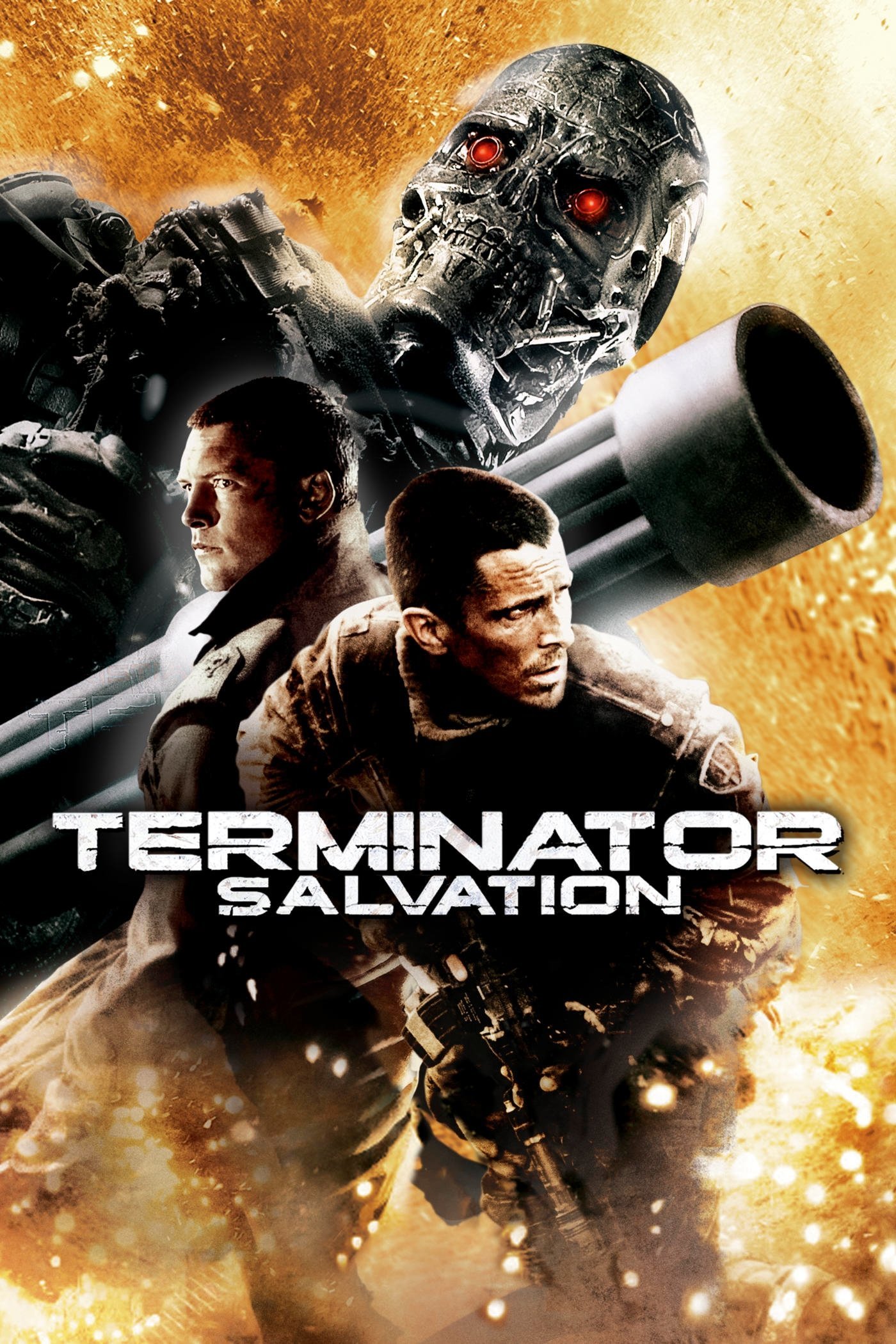
I didn’t love Terminator Salvation. It was ok, it looks great in places and it finally gives you the future war the first three films only talked about, but somewhere along the way it decides the most interesting person in that war isn’t John Connor at all, and that’s where it lost me. Three films, Terminator 2 most of all, had spent their whole running time building John up as the man who saves humanity, and when the series finally gets to show him doing it, he’s pushed to one side for a brand new character with no history in the series at all. I can see what it was trying to do, I just think it picked the wrong story to tell in the right world. This is my Terminator Salvation review, and it’s a lot less gushing than the last couple, so fair warning.
The war we’d been waiting to see
The idea behind Terminator Salvation is a good one, and on paper it’s the Terminator film I’d most wanted someone to make. Instead of another chase through present-day Los Angeles it’s set in 2018, after Judgment Day, in the burned-out world Kyle Reese described back in The Terminator. John Connor (Christian Bale) is a resistance fighter, respected but not yet the leader everyone knows he’s supposed to become, taking orders from a command structure that doesn’t fully trust him. Skynet is building the T-800 for the first time. And Kyle Reese himself is out there somewhere, a teenager (Anton Yelchin) scraping by in the ruins of LA, with no idea he’s going to be sent back in time to become John’s father. All of that is great material, the bones of a properly epic war film, and the first stretch does a good job of putting you in it. The opening raid on a Skynet base, John’s helicopter going down and him crawling out to find the base wiped out, is grim and loud and exactly the kind of thing I’d always pictured.
The machines look fantastic too. The giant Harvester that scoops people up like it’s picking fruit, the Moto-Terminators that peel off it and chase a tow truck down the highway, the hydrobots in the river. It’s the first time the series really had the money to show Skynet’s whole army, and in those scenes it feels like the future war the films kept promising. I just wish the film had been more interested in the people fighting it. The resistance itself is barely sketched, a submarine full of generals led by Michael Ironside who mostly exist to give John orders he ignores, and a radio broadcast John records for the survivors that we hear but never see anyone actually listening to. You never get a sense of who these people are, what they’ve lost, or why they’d follow John over anyone else. For a film about the last of humanity fighting back, there’s surprisingly little humanity in it, and that gap gets wider the further the film goes.

Marcus Wright, and why he’s the problem
The film opens in 2003 with a death-row prisoner, Marcus Wright (Sam Worthington), signing his body over to a Cyberdyne scientist (Helena Bonham Carter) before his execution. Fifteen years later he wakes up in the wasteland with no memory of what happened, and the film follows him far more than it follows John. He meets Kyle, he gets taken in by the resistance pilot Blair Williams (Moon Bloodgood), and slowly works out that he’s a machine himself, a cyborg with a human heart and brain built by Skynet to get inside the resistance. It’s a decent twist and Worthington plays it well enough. But the more time the film spends on Marcus and his question about whether he’s human, the less there is for John, and John was the whole reason I wanted to watch it.
That’s my big problem with Salvation. The whole point of the human resistance is that it’s people, ordinary people who’ve lost everything, refusing to give up against machines that are better than them in every way, and in that sense it should feel a bit like the Butlerian Jihad from Dune, humanity’s war to never be ruled by thinking machines again. Instead the hero of the film turns out to be another machine. Marcus gets the emotional arc, the redemption, the big choice, and in the end he literally gives John his heart. John spends most of the film shouting into radios. Christian Bale is in full gravelly intensity mode and there’s nothing much for him to play except anger, and it’s a waste of the character. I wanted to see why people follow John Connor, and the film never really shows me. Even his relationship with his wife Kate (Bryce Dallas Howard), pregnant and working as a medic, gets a couple of scenes and then fades into the background. Meanwhile Marcus gets a whole budding romance with Blair, a backstory, a crisis about who he really is and a sacrifice. The balance feels completely backwards.
The bits that do work
It’s not a bad film, and I don’t want to make it sound worse than it is. Anton Yelchin is great as the young Kyle Reese, scrappy and loyal and believable as the man Michael Biehn becomes, and the little moments of him with the silent girl Star are some of the warmest in the film. The action is big and well put together, and the design of the machines, rusty and practical and built to kill, fits the world the first film sketched out. There’s a nice touch where John listens to his mother’s tapes, Sarah’s voice telling him what’s coming and what he has to do, which links this world back to the earlier films better than anything else in it. The ruined cities look the part too, grey and dusty with machines patrolling the skies, a lot closer to the war-torn real world in The Matrix than to the neon LA of the first two films.
The finale inside Skynet’s San Francisco base brings in a T-800 wearing a young Arnie’s face, and I’ll admit I grinned when it walked in, even though the CGI hasn’t aged brilliantly. It’s a fun callback, John fighting the exact model that will one day be sent back to kill his mother, and for those few minutes it feels like a Terminator film again. Then the film remembers Marcus and goes back to him. The plot around the base doesn’t help either, there’s a radio signal that’s supposed to shut the machines down, and it turns out to be a Skynet trick to find the resistance command, which is a decent idea that’s rushed through so quickly it barely registers.
A missed chance more than a bad film
What frustrates me most about Terminator Salvation is how close it was to being something special. The setting is right, the machines are right, Kyle Reese is right. If the story had stuck with John and the resistance, the decisions he has to make, the people he loses, the moment he becomes the leader everyone’s been waiting for, I think it could have been the third great film in the series. Instead it feels like it’s been told from the wrong angle. The ending is the clearest example of that, with John badly wounded and Marcus giving up his own heart to save him, so the man who’s supposed to save humanity only survives because a machine decided to save him. I get what it was going for, a machine choosing to be human, but it takes the win away from the people who’d been fighting for it. It’s the same feeling I had all the way through, that the film had a great world and the wrong lead, and by the end I was more interested in what happened to Kyle than to anyone else on screen. What’s left is a film that’s loud and good-looking but thin, and time hasn’t really changed that.
6.0 out of 10. I’d watch it again for the Harvester and young Kyle, but it’s the Terminator film I reach for least.
Should Salvation have been John Connor’s story from start to finish, or does Marcus Wright deserve more credit than I’m giving him? Tell me in the comments.

1 comment
Anton Yelchin as young Kyle Reese is the bit of Salvation I’d keep, he’d have been great in a film that was actually about the resistance.