I round up my military SciFi picks of 2025, which turned into a year of BattleTech: the whole Blood of Kerensky trilogy, Falcon Guard, Heir to the Dragon and the fourth Gray Death Legion book, plus rereads of Starship Troopers and Live Free or Die, and The Terran Privateer carried over from a few years back.
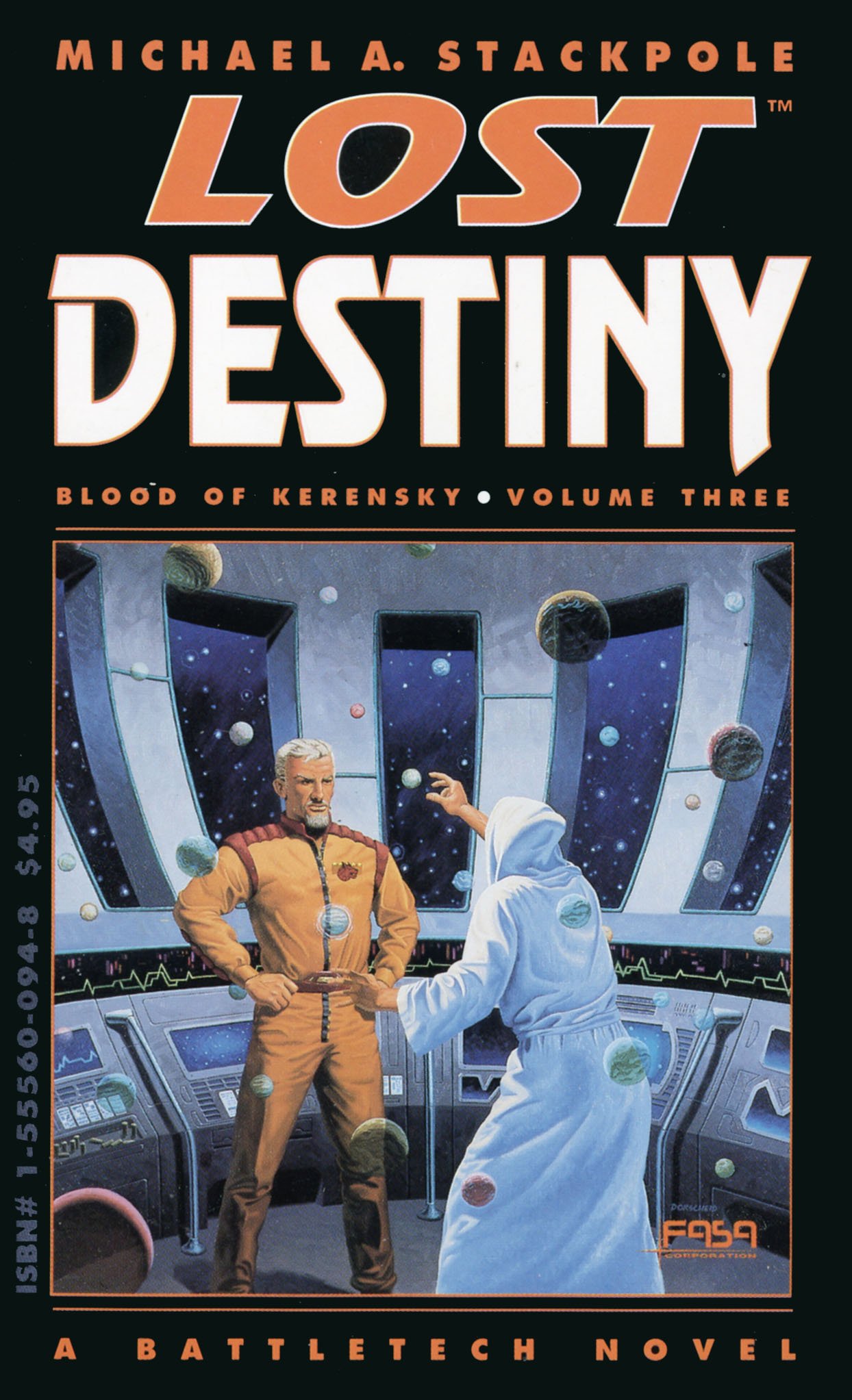
Lost Destiny was my favourite, a 5/5 and the best book in the best trilogy the BattleTech fiction line has produced, and Starship Troopers and Live Free or Die both got five stars too. Lethal Heritage and Blood Legacy got 4s, while Falcon Guard and Blood of Heroes both landed at 3.5.
These are my military SciFi picks of 2025, and looking back at what I actually reviewed this year it’s pretty obvious where my head was. I spent most of the first half of the year deep in BattleTech, going back through the Clan invasion books I first read years ago, and then filling in the gaps I’d somehow never got round to, including a third book I’d been meaning to finish for seven years. In between I went back to a couple of old favourites that sit on the same shelf in my head, the kind of book I reread every few years whether I mean to or not. Every pick below comes from a review I’d already posted by the end of the year, and the scores are the ones I gave at the time. It isn’t a top nine or a top ten, it’s just what I read and what I thought of it. For an earlier stretch of the same reading, my military SciFi picks of 2019 cover the BattleTech novels I’d been working through back then.
I’ve grouped them rather than ranking them one to nine, because a BattleTech trilogy and a 1959 Heinlein novel aren’t really competing for the same spot. There’s the trilogy that dominated my year, two books that tell parts of the same war from completely different angles, the two classics, and a couple of others that I liked without loving. One bit of advice that I keep repeating in the BattleTech reviews, and I’ll repeat it here, is that none of these is where I’d start somebody brand new to that universe. Get a feel for the Inner Sphere first, with the mercenaries and the contracts and the politics, because the Clans only mean anything once you understand what they’re invading.
The best of the year: the Blood of Kerensky trilogy
Lethal Heritage is where it starts, and it’s the book that took a setting I thought I understood and rearranged it completely. Five centuries of the same houses fighting the same war, and then something comes out of the deep Periphery, past the edge of every chart, faster and better armed than anything the Successor States can field. The jump from the warring houses to the invasion was a genuine twist that caught me completely by surprise when I first read it, and in a very good way. Kai Allard-Liao quickly became one of my favourite characters in the whole series, and he still is. I gave it 4/5, a genuinely great book and a terrible entry point, which is an unusual combination.

Blood Legacy is the middle book, which is usually where a series goes quiet and moves furniture around for the finale, and this one doesn’t. I’d rate it slightly below the first, but only slightly. Jaime Wolf sitting the Inner Sphere’s leaders down on Outreach and telling them what’s really coming is a light bulb moment for a lot of people in that room, and it was a necessity for me too, and the defence of Luthien is one of the best battles in the trilogy. Another 4/5.
And then Lost Destiny, my favourite of the three and the one I’d hand somebody who wanted to know why this trilogy has the reputation it does. Kai, presumed dead and stuck behind Jade Falcon lines with nothing, finally stops arguing with himself, Phelan wins a Bloodname nobody thought a freeborn could hold, and Tukayyid deserves every bit of its reputation. It’s so well done that you can almost see it. If you only ever read three BattleTech novels, read these three, in order. 5/5, and the best book of my year.
The same war, from the other side
Falcon Guard finished a job I’d left hanging since 2018, when I read the first two Jade Falcon books and then simply never picked up the third. Coming back to it straight after Lost Destiny turned out to be the best possible way to read it, because it’s the same battle, Tukayyid, from the losing side. In one book it’s a triumph, a prepared position and a commander who out-thought people too arrogant to think. In this one it’s confusion and attrition and warriors who genuinely can’t process what’s happening to them, because the Clans have no vocabulary for losing. Aidan Pryde’s ending is good, if a bit too neat for me, and I’d have liked a lot more of his daughter Diana. I called it a 3.5, and on a generous day a 4, and I’ll be honest that I’d never rate these as high as the Blood of Kerensky books.

Heir to the Dragon is a BattleTech novel that barely has any BattleMech combat in it, and it’s one of the best books in the whole classic line. That combination shouldn’t work. It absolutely does. It’s thirty-six years of Theodore Kurita learning to wait, a planner who takes the long view inside a feudal state run by his own father, and it feels like something out of feudal Japan, with samurai and warrior culture right at the heart of it. Whether Takashi is obstructing his son or grooming him, the book never tells you outright, and I loved that. Recruiting the yakuza into the armed forces of a state built on honour is the single best political move in the book. I didn’t give it a number, but I’d put it near the top of the classic political novels, and the Audacity section at the end is where all that patience pays out.
Two classics I keep going back to
Starship Troopers got 5 out of 5 when I went back to it this year, and it still earns that. At heart it’s a coming-of-age story, Johnny Rico joining the Mobile Infantry more or less on a whim and finding out what that actually means, through a brutal boot camp and Sergeant Zim, one of the most memorable characters in the genre. The powered armor is where so much of what came after it started, from Halo’s Spartans to the space marines in Warhammer 40K. And then there’s the politics, citizenship earned through service, which people are still arguing about more than sixty years later. Whatever your stance, it makes you think, and every time I reread it I find something new to chew on. It’s also just a damn good story, which is easy to forget under all the arguing.
Live Free or Die is the book I’ve reread more than anything else John Ringo has written, and it isn’t the space battles that keep bringing me back, it’s the economics. Aliens arrive, the Horvath take the orbitals and demand tribute, and Earth becomes a slave planet by arithmetic rather than invasion. Then a broke webcomic artist corners the market in maple syrup, which turns out to be a luxury good to one alien species, and builds an economy that can afford a war. I’m Canadian, so I didn’t read that with any kind of detached distance. The mining laser and the inflated asteroid fortress are two of the best ideas in military sci-fi, and it got five stars from me. It’s the one Ringo book I’d hand to somebody who’s never read him.

The Gray Death again, and one carried over
Blood of Heroes taught me the Gray Death Legion is seven books long, not the trilogy I’d always filed it as. My main problem with it is that it basically clones the original, with Grayson’s son Alexander and a planet of cadets left to perform the same miracle all over again, and doing it with the son doesn’t hit as hard as doing it the first time with the father. Where it earns its place is the fighting. The Legion using Glengarry’s maglev railway to move between three fronts faster than the invaders can react is a properly satisfying bit of tactics. I gave it 3.5, the weakest of the four Gray Death books I’ve read and still an easy recommendation.
The one I’m carrying over is The Terran Privateer, which I reviewed back in 2020 and gave a 4 for both my opinion and my recommendation. Earth gets occupied by a supposedly benevolent alien empire, and Captain Annette Bond takes the only experimental hyperspace cruiser out with a letter of marque to find allies and technology to bring home. The aliens being unable to lie makes the politics more interesting the further it goes. I’d have liked a bit more real danger, but I’ve enjoyed that series through eight books and counting.
Looking at the whole year together, the thing that strikes me is how much of it was about the cost of war rather than the fun of it, from Tukayyid seen from both sides to a planet occupied by arithmetic and a son left holding the bag. I didn’t plan it that way, it’s just what I was in the mood for, and honestly it wasn’t a bad year at all. If you only pick up one, make it Lost Destiny, as long as you’ve read the two before it. And if you want something you can start cold, Live Free or Die is the one.
Which of these would you add to your own military SciFi shelf, and what did I miss? Tell me in the comments.

1 comment
Looking at the list as a whole, BattleTech took over my year. Which book from this list would you read next, and is there another war story I should add to my shelf?