Just finished Winter’s Heart, and after The Path of Daggers being the quietest entry in the series, this one swings hard in the other direction. Two of the biggest payoffs in the entire Wheel of Time land in this single book, and I closed it feeling like the series had suddenly remembered how to deliver a gut-punch.
The Cleansing
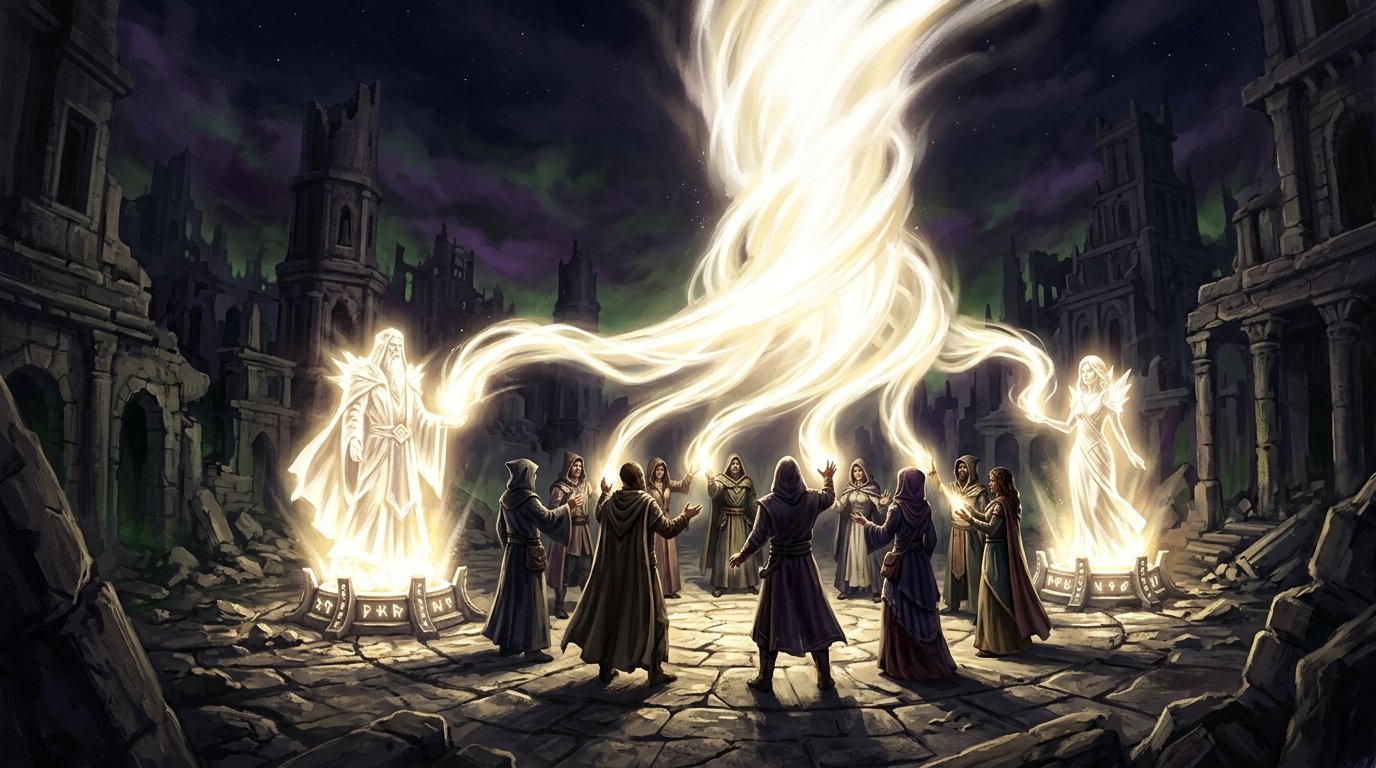
I have to start with the Cleansing, because it’s one of the most purely satisfying moments in all fourteen books. Since the very first pages of The Eye of the World, we’ve known that saidin, the male half of the True Source, is tainted by the Dark One, and that every man who channels is slowly, inevitably driven mad and rotted away by it. It’s the reason male channelers get hunted down. It’s the reason Rand has spent nine books with a ticking clock hanging over his head. And in this book, using the male and female Choedan Kal together at Shadar Logoth of all places, Rand and a task force of Asha’man, Aes Sedai, and Wise Ones actually manage to burn the taint away.

It’s hard to overstate how big this is. This isn’t a battle won or a city taken. It’s a fundamental law of this world getting rewritten in real time, undoing something that’s been true for three thousand years. The sequence itself is chaotic and dangerous, since nobody involved is entirely sure it’ll work and there’s real tension right up until the moment it becomes clear that it has, and the fact that Rand pulls it off using an enemy’s captured artifact and a coalition of people who don’t fully trust him or each other makes it land even harder. I got chills rereading it, and I already knew exactly how it ends. The ripple effects are just as compelling as the moment itself. Men who channel don’t have to be a walking death sentence anymore. The entire structure of fear the world has built around male channelers, the entire reason gentling exists, potentially just stopped making sense overnight. Most of the world doesn’t know that yet, and I’m looking forward to watching that news spread and land differently depending on who’s hearing it.
I also love that Jordan doesn’t let the people involved trust it immediately. Nynaeve, who’s there for the whole thing, spends the aftermath testing and re-testing whether it actually worked, because three thousand years of certainty doesn’t just dissolve because one attempt went well. That skepticism from the person best positioned to verify it grounds a moment that could have easily tipped into pure spectacle. It earns the weight it’s clearly meant to carry.
Perrin rescues Faile
And then, finally, Perrin gets Faile back. After books of hunting, tracking, and getting angrier and colder with every setback, watching him actually catch up to the Shaido and pull off the rescue is enormously satisfying. It’s not a clean, easy victory, because Perrin’s willing to burn down a lot to get her back, and there’s a ruthlessness to how he handles the Shaido camp that shows exactly how much this hunt has changed him. But it works, and after so many books of this thread simmering in the background, having it actually resolve here rather than dragging out even further is a real relief. What I like most is that the reunion isn’t just triumphant. Perrin’s not the same person who lost her, and there’s an honesty to how Jordan handles that, because the cost of the last few books doesn’t just evaporate the second Faile’s safe again. It gives their relationship more weight than a simple rescue-and-reunite arc usually earns.
Looking back at the whole arc now that it’s resolved, I have more appreciation for it than I expected going in. It took a long time, longer than it probably needed to, but the payoff of watching a fundamentally gentle character choose to become someone harder because the situation demanded it, and then have to live with that choice once the crisis is over, is exactly the kind of character work this series does best when it’s firing on all cylinders. I want to spend a moment on Rand specifically too, because his chapters here carry a different kind of tension than the Cleansing sequence itself. Pulling off something this dangerous requires him to trust people he has every reason not to fully trust, and there’s a real vulnerability in watching him hand that much control to a mixed group of Asha’man, Aes Sedai, and Wise Ones who don’t even fully trust each other. It’s a good showcase for how far he’s come as a leader, not by doing everything himself but by finally being willing to depend on other people at the exact moment it matters most.
Mat, Elayne, Egwene
Mat’s storyline takes an interesting turn here, tangled up with Tuon, a young Seanchan noblewoman who is very much not what Mat bargained for when their paths crossed. I love watching Mat, of all people, get thrown by someone, because he talks his way out of everything and reads every room instantly, and Tuon is the first person in a long time who seems to be several steps ahead of him instead of the other way around. It’s a fun dynamic, and I’m curious to see where Jordan takes it, especially given how much history the Seanchan carry as a faction.
Elayne’s own storyline keeps building in the background of everything else, with her claim on the Sun Throne of Andor inching forward even while she’s stuck dealing with pregnancy complications and the general chaos of trying to run a claim to a throne from a distance. It’s not the flashiest material in the book next to the Cleansing and the Faile rescue, but I appreciated how grounded it felt, with actual governance problems and actual logistics instead of everything being solved through raw power. It’s a good reminder that this series cares about the boring, load-carrying parts of ruling almost as much as it cares about the magic and the battles. Egwene doesn’t get the most page time in this book, but what she does get shows how much command she’s built over the rebel Aes Sedai by this point. Coordinating something as delicate as the Bowl of the Winds effort from her position takes real political capital, and watching her spend that capital confidently, without the second-guessing that marked her earliest chapters as Amyrlin, is a nice quiet marker of how far she’s come. It’s easy to let a character’s growth become background noise once it’s established, and this book does a good job of still making it visible.
This is the book I’d point to if someone asked me why I keep coming back to this series even through the slower stretches. The Cleansing alone would make Winter’s Heart a standout, and pairing it with Perrin finally getting Faile back makes this one of the most rewarding entries since The Shadow Rising. After A Crown of Swords and Path of Daggers felt like the series catching its breath, this is Jordan reminding me exactly why I fell for these books in the first place.
Diving into Crossroads of Twilight next.
