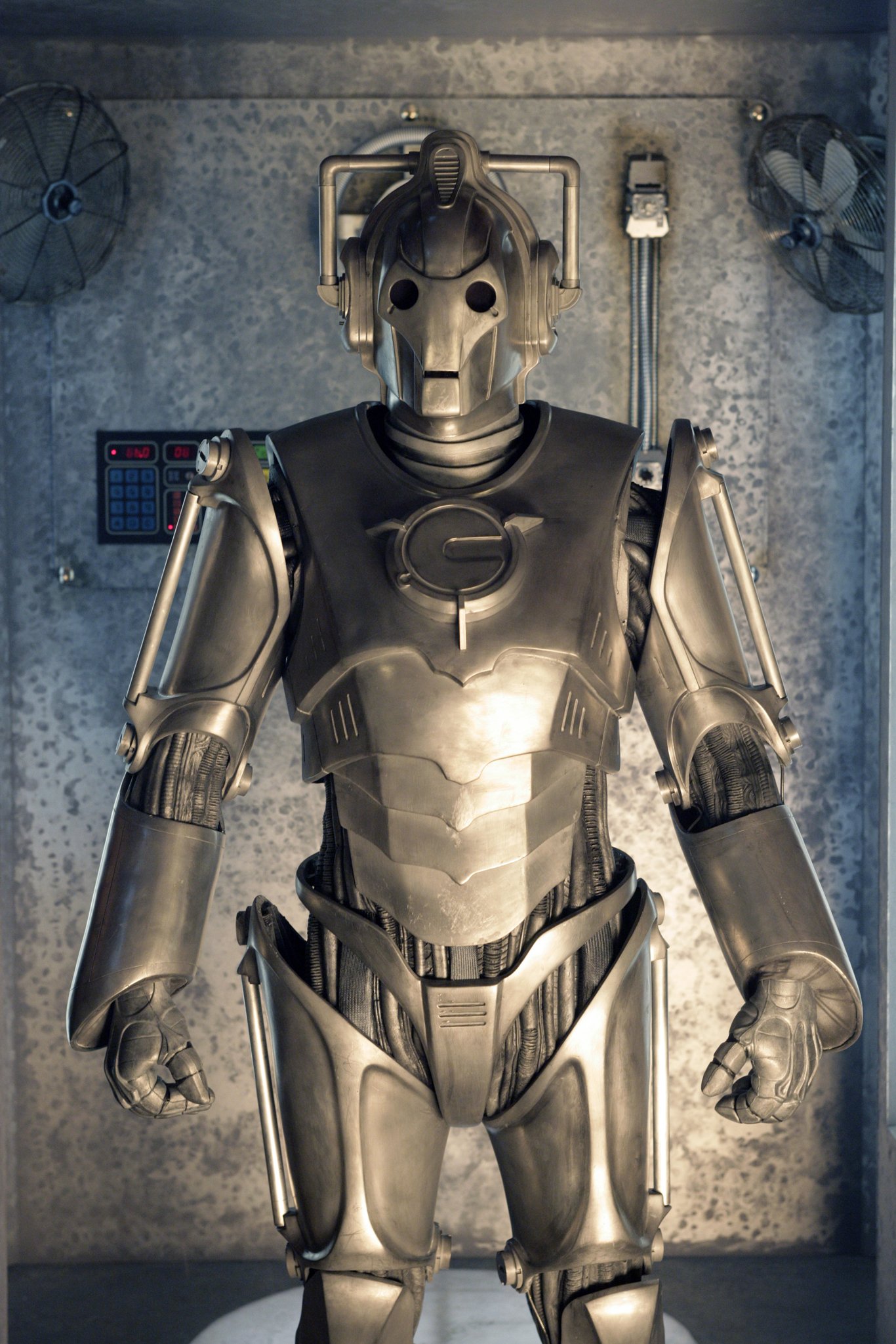
The Age of Steel closes out the two-part Cybermen story that began the previous week, following the Doctor, Rose, and the Preachers as they storm John Lumic’s Battersea factory to stop a city-wide forced upgrade. The episode turns on the discovery that the Cybermen are converted humans kept docile by an “emotional inhibitor,” and that switching it off would let them feel, and be destroyed by, what has been done to them.
The review credits the episode’s horror to that single idea and singles out Mickey Smith’s arc as its emotional core, tracking his shift from comic relief to the person who saves London and then chooses to stay behind in the parallel world. It closes with a rating of 4 out of 5, calling the episode a strong, emotionally intelligent resolution to the two-parter.
Picking up right where “Rise of the Cybermen” left off feels almost unfair. The Doctor’s cornered, the whole party’s surrounded, and that flat steel voice is promising to delete everyone in the room. After the quieter, romantic detour of The Girl in the Fireplace, this two-parter throws me straight back into it, and “The Age of Steel” has a lot to deliver after a first half that spent most of its runtime setting pieces on the board rather than knocking them over. I’m happy to say it delivers. This is the half where everything that spent last week clicking into place finally goes off, and while there’s plenty of running, shooting, and factory-storming, what actually sticks with me is a genuinely upsetting idea at its centre, plus the payoff of an arc I’ve been watching build for half a season. This is the episode where Mickey Smith stops being the tin dog for good.
Escaping the Trap
The escape itself is a nice bit of business. The Doctor pulls out the TARDIS’s last power cell and blasts the Cybermen with raw energy, and the survivors scatter into the night. From there it’s a race to Lumic’s Battersea factory, with the Doctor, Rose, Pete, Mickey, and the Preachers converging on the place where the “upgrades” are happening from every angle. Lumic himself gets a nasty comeuppance dressed up as a promotion. His failing body finally gives out, and his own Cybermen forcibly convert him into the Cyber-Controller, the exact fate he designed for everyone else. The man who wanted to escape death by becoming steel gets exactly what he asked for, and he hates it.

Then Lumic springs his masterstroke. Every EarPod in the city switches on at once, and all across London ordinary people go blank-eyed and start walking: a silent, orderly procession of the controlled, filing toward the conversion factories by the thousand. It’s a genuinely chilling image, and it pays off every ominous thing the first episode planted about a population that handed over its attention without a fight. Rose’s mother is out there in that crowd. So is everyone else’s.
What follows is a proper assault, and the episode splits its heroes up smartly so everyone has something to do. The Doctor and Mrs Moore go in low through the freezing access tunnels beneath the plant. Rose and Pete bluff their way in from above wearing deactivated EarPods. Mickey and Jake take to the air in a stolen zeppelin. It gives “The Age of Steel” real forward momentum after the deliberate slow build of part one, and because the team’s scattered, when things start going wrong (and they go wrong for very nearly everyone), the losses land on people I’ve spent two episodes coming to care about.
The Horror in the Steel
Here’s where “The Age of Steel” earns its keep. For all the metal-monster spectacle, the episode’s real weapon is one simple, awful idea: the Cybermen are people. Every one of those steel shells has a human brain trapped inside it, and the only thing stopping each of them from screaming is an “emotional inhibitor,” a chip that switches off the horror of what’s been done to them. Sit with that for a second. They aren’t robots. They’re victims, anaesthetised against their own existence.

The show drives it home in the episode’s best and bleakest scene. The Doctor and the brilliant, brave Mrs Moore corner a dormant Cyberman and switch off its inhibitor, and it turns out to be a woman named Sally, converted the night before her wedding, still asking about her fiance, still cold because she’s “getting married in the morning.” She realises, in real time, what’s been done to her, and the grief of it kills her. It’s horrifying in a way the show rarely attempts, and it hands the Doctor his solution at a terrible price: Mrs Moore is murdered by a Cyberman moments later, one more good person lost to Lumic’s machine.
The Doctor works out that the inhibitor is the whole game. Shut it off everywhere at once, and every Cyberman in the city wakes to the full horror of its own body and is destroyed by it. It’s a solution that doubles as a mass mercy killing, and the episode doesn’t pretend otherwise. The Doctor frees these people the only way he’s got left, and it’s the saddest kind of victory. Tennant plays it with no trace of triumph, just a man doing the necessary, terrible thing because no one else will, knowing exactly what it costs. It’s the same cold resolve I saw beneath the charm when he faced down the Sycorax in The Christmas Invasion, turned here toward an act of grim mercy.
Mickey Smith, Hero
And the person who makes it happen is Mickey. The arc that’s been simmering since he named himself the tin dog in School Reunion pays off completely here. He watches his own parallel double, Ricky, die at the hands of the Cybermen. It’s a gut-punch that could have broken him, and instead of folding, he steps into the gap. He takes the wheel, hacks into Lumic’s systems, pilots a zeppelin, and cracks the code that broadcasts the cancel signal to every inhibitor in London. The spare part saves the world. The man who was always told to wait in the car turns out to be, when it counts, the cleverest and bravest person in the building.
What lands even harder is what he does next. With the Cybermen beaten and Lumic fallen from his burning factory, Mickey chooses to stay. There’s a version of his beloved gran alive on this world, a fight still to finish alongside Jake, and, crucially, a place where he’s needed and seen rather than trailing after the Doctor and Rose as an afterthought. His goodbye is understated and quietly heartbreaking. He isn’t being left behind this time. He’s choosing to stay, on his own terms, as his own man. The friendship he strikes up with Jake, spiky at first and then real once shared grief over Ricky welds them together, gives Mickey something the Doctor and Rose never quite managed: a partner who genuinely needs him. By the time he waves the TARDIS off, I completely believe he’s found where he’s meant to be. After a season of watching him ache to matter, it’s an enormously satisfying send-off.
Rose’s farewell is rougher. Pete Tyler, this world’s Pete, who never had a daughter, can’t cope with what she represents and simply walks away from her, and there’s nothing she can do but let him. It’s a cold little echo of everything Father’s Day put her through: a second version of her dad slipping through her fingers.
Where The Age of Steel Leaves Me
I came out of this two-parter thinking about how much it manages to reframe. The Cybermen aren’t killer robots to me anymore. They’re converted people, screaming behind steel until a chip silences them, and that one idea does more work than any amount of factory-storming could. The Doctor’s win is to let thousands of trapped minds finally feel what happened to them: a rescue that’s also a mass death. I respect that the episode has the nerve to sit in that discomfort instead of glossing past it. Lumic gets exactly what he wanted, too. The prophet of the upgrade is upgraded against his will, which is about as tidy and grim a piece of poetic justice as this show has ever managed.
But the thing I’ll remember most is Mickey. The tin dog becomes the hero and then walks his own road, choosing to stay behind out of purpose rather than defeat, and I think it’s one of the best companion arcs the show has told, something other Doctor Who fans have picked up on too. Rose loses her father all over again in the same hour, and this time there’s no saving him. Just the quiet cruelty of being unrecognised by someone who should have been family. That’s a lot for one episode to carry, and it mostly carries it.
Rating: 4/5. A strong, emotionally intelligent resolution that mostly justifies the slow build of part one, anchored by the horror of the inhibitor scene and a career-best turn for Mickey. A little of the factory-storming plays as standard-issue, but the heart of it is anything but.
The Doctor and Rose step back into their own world one companion lighter, with a hard conversation waiting for them at home. Mickey Smith stayed behind, a hero. I honestly didn’t see that coming back when he was just the bloke minding the phone.

3 comments
[…] room exactly right. With Mickey gone now, having chosen his own road in the parallel world back in The Age of Steel, it’s just the Doctor and Rose again, and I liked watching the two of them roar into 1953 on […]
[…] are the Cybus models we watched being stamped out in a Battersea factory in The Age of Steel, which gives them an oddly poignant status here: refugees from a dead parallel world, stranded in […]
[…] season’s asked someone to leap without a net, either. Mickey did the same a few weeks back in The Age of Steel, choosing to stay in a world he’d never see again because it mattered more than being sure of […]