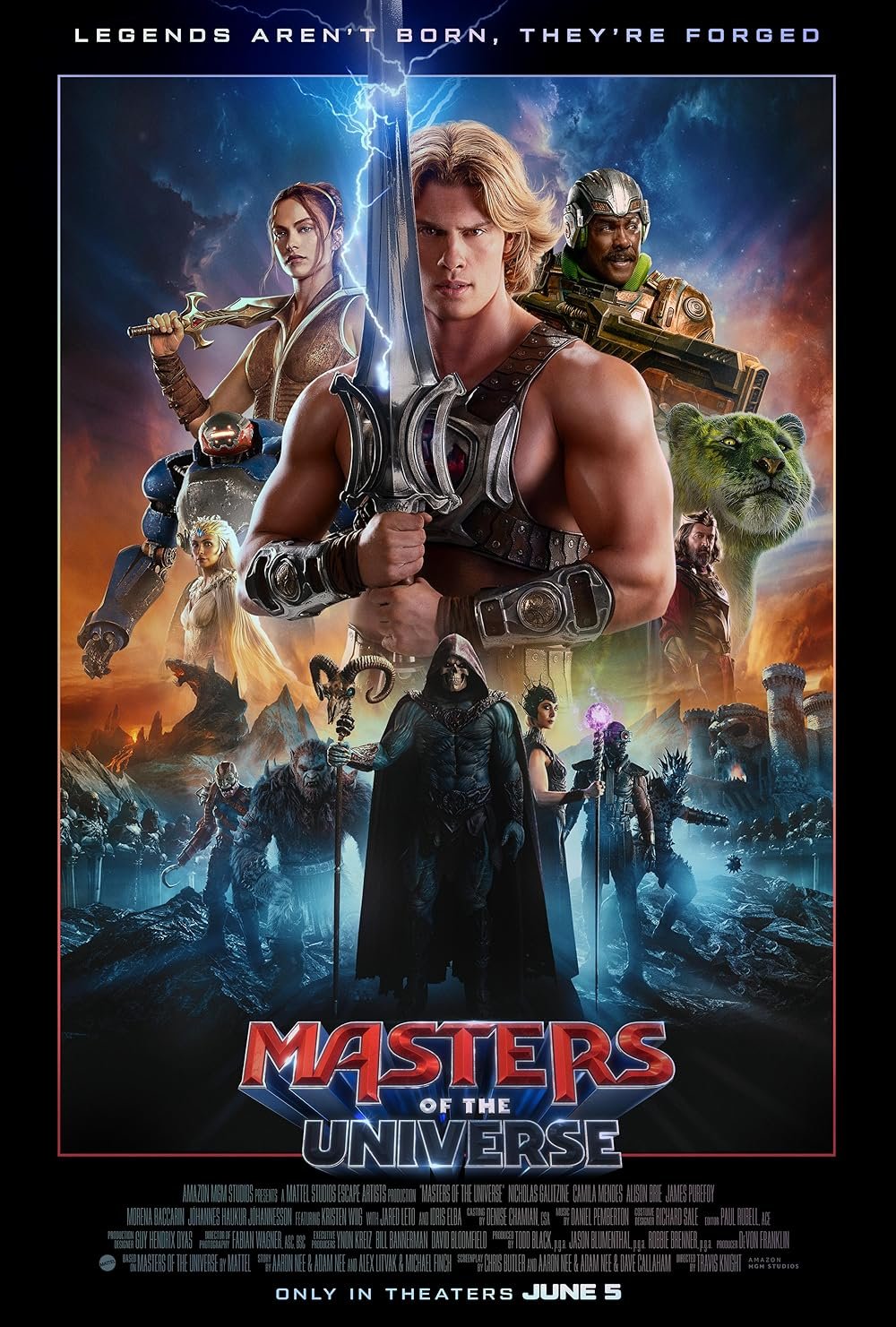
The 2026 Masters of the Universe film is a tonally inconsistent adaptation that struggled commercially, opening to $29 million domestically before a steep second-weekend drop, with audiences skewing heavily toward adults aged 45–54 rather than children. The film’s core problem is an unclear target audience, reflected in its uneven tone, half-committed edge, and repetitive innuendo.
Despite its flaws, Jared Leto’s Skeletor stands out as a genuinely effective villain — unambiguously malevolent, theatrically performed, and unburdened by redemption arcs. Supporting elements like Nicholas Galitzine’s Prince Adam and a Dolph Lundgren cameo add charm, making the film an enjoyable if imperfect watch for longtime fans.
Let me get the verdict out of the way first: the 2026 Masters of the Universe is not a good movie. It’s a tonal mess that can’t decide who it’s for, it lost a reported $170–200 million at the box office, and I have no plans to watch it again any time soon.
I also had an absolute blast.
Both of those things are true, and that tension is basically the whole review. This is the rare bad film that’s fun bad — not “so incompetent it’s funny” bad, but “swinging wildly and connecting maybe 60% of the time” bad. And when it connects, it connects hard enough that I walked out grinning.
The movie doesn’t know who it’s for
Here’s the core problem, and it’s the same one that sinks most of these 80s-IP resurrections: nobody decided who was buying the ticket. The box office told the story fast — it opened to a soft $29 million domestic, cratered about 70% the next weekend, and the crowd that did show up skewed heavily toward men in the 45-to-54 bracket. Kids under 12 were something like 5% of the audience. That’s not a family blockbuster. That’s a nostalgia play that forgot to bring the kids.
You can feel that confusion in the movie itself. The violence is pitched a notch too intense for the little ones but pulls its punches for the adults. There’s swearing, but not enough to commit to an edge — just enough to feel like it wandered in from a different cut. And then there’s the innuendo.
Oh, the innuendo.
Look, I grew up on He-Man. Fisto. Ram-Man. As a kid, those names meant nothing beyond “guy with big fist, guy who rams things.” As an adult watching this movie lean directly into the jokes those names set up — repeatedly, and about as subtly as a brick — I couldn’t unsee it. And I’m not sure I was supposed to. Even the critics clocked it; one of the UK reviews basically built its headline around the added innuendo. A couple of those gags land. A dozen of them in a row just becomes the movie elbowing you in the ribs going “eh? EH?” until you want it to stop. It’s trying too hard, and trying too hard is the film’s default setting.
I’ve written before about why these 80s reboots keep face-planting — Terminator: Dark Fate is the poster child — and the pattern holds here. The nostalgia gets you in the door and then the movie has no idea what to do with you once you’re inside.

Skeletor. Absolute Skeletor.
And yet. And yet.
If you take one thing away from this: Jared Leto’s Skeletor is exceptional. One of the best comic-book-adjacent villains I’ve seen in years, and I don’t say that lightly given how much this genre loves to fumble its bad guys.
Here’s what makes it work, and it’s the thing modern Hollywood keeps getting wrong. Skeletor is bad. Bad to the bone. There’s no tragic backstory, no misunderstood-outsider arc, no third-act pivot where you’re supposed to feel for him. He wants to rule Eternia, he’ll burn everything down to do it, and the movie never once asks you to sympathize.
Compare that to where villains have been trending. I reviewed Maleficent years back and the whole enterprise was about redeeming the villain, softening her into a wronged heroine — and the film buckled under the weight of it. Wicked is doing the same thing on a much bigger stage right now, the whole “actually the villain was right” reframe. It’s become the default move. Give the bad guy a reason. Make them relatable. Redeem them.
Skeletor doesn’t get any of that, and he’s better for it. Leto plays him full camp — every line reading is theatrical, gleeful, dripping with menace, and the design leans all the way into the skull-faced horror of it. He’s clearly having the time of his life, and it’s infectious. There’s a reason the memes wrote themselves. When a movie this messy has one element working at this level, that element becomes the reason to watch.
The wild part is the movie almost seemed embarrassed by its best asset — Leto barely turned up in the marketing. If you spend $200 million and the single best thing you made is your villain, put him on every poster. Instead they hid him, and it shows in the numbers.
Supporting cast, action, and everything else
The supporting cast mostly gets it. Nicholas Galitzine makes a solid, perpetually-confused Prince Adam, which is the right read for a guy who spent 15 years on Earth not knowing he’s the most powerful man in the universe. And I have to give special mention to Cringer — the cowardly big cat is a real highlight, one of the small pleasures that kept the middle stretches watchable.
The action, when the movie stops second-guessing itself, is fine. Director Travis Knight (who made the very good Bumblebee, another childhood-toy adaptation) clearly loves this world. The problem was never affection. It was focus.
Two things for the faithful (mild spoilers)
Skip this bit if you want to go in clean, but there are a couple of nods here that made the fan in me very happy.
First: Dolph Lundgren shows up. The original He-Man himself, from the 1987 movie, turns up in a cameo as a “Macho Man” who runs into Adam at a gym. It’s a wink, it’s brief, and it’s exactly the kind of passing-the-torch gag that lands when a movie has this much affection for its own history. Forty years on from a version that famously bombed harder than this one did, getting Lundgren back in the frame is a nice touch — one of those moments where you can tell the people making it actually care about the toy line they grew up on.
Second: stay through the credits. There’s a mid-credits scene teasing Adam’s sister — Adora, better known to anyone who grew up with the cartoon as She-Ra. Whether that tease ever pays off is a real question given how the box office went, but as a statement of intent it got the exact reaction it wanted out of me. A messy movie that still remembers to plant a She-Ra flag knows what its audience wants, even if it couldn’t get enough of that audience into a theater.
Should you watch Masters of the Universe?
If you grew up with He-Man and you can walk in with your expectations set to “I want to have fun, not see a masterpiece” — yes, absolutely, watch it. There’s a good laugh in here and a great villain, and the audience score reflects that (the crowd that saw it loved it — it set a franchise record on Rotten Tomatoes even as critics landed on a lukewarm 68%).
If you’re looking for a genuinely good movie, or a new franchise cornerstone the way this obviously wanted to be? It isn’t that. It’s a mess. A fun mess, a mess with a killer Skeletor at the center of it, but a mess.
I laughed. I had a good time. I won’t watch it again for a long while. For a bad movie, that’s a better outcome than most manage — and it puts it a solid tier above the joyless, over-serious reboots I’ve complained about, like when I argued Fox had no business turning the X-Men into another grimdark TV slog. At least this one remembered to be entertaining.
He-Man had the power. The movie around him mostly didn’t. But Skeletor? Skeletor had all of it.
