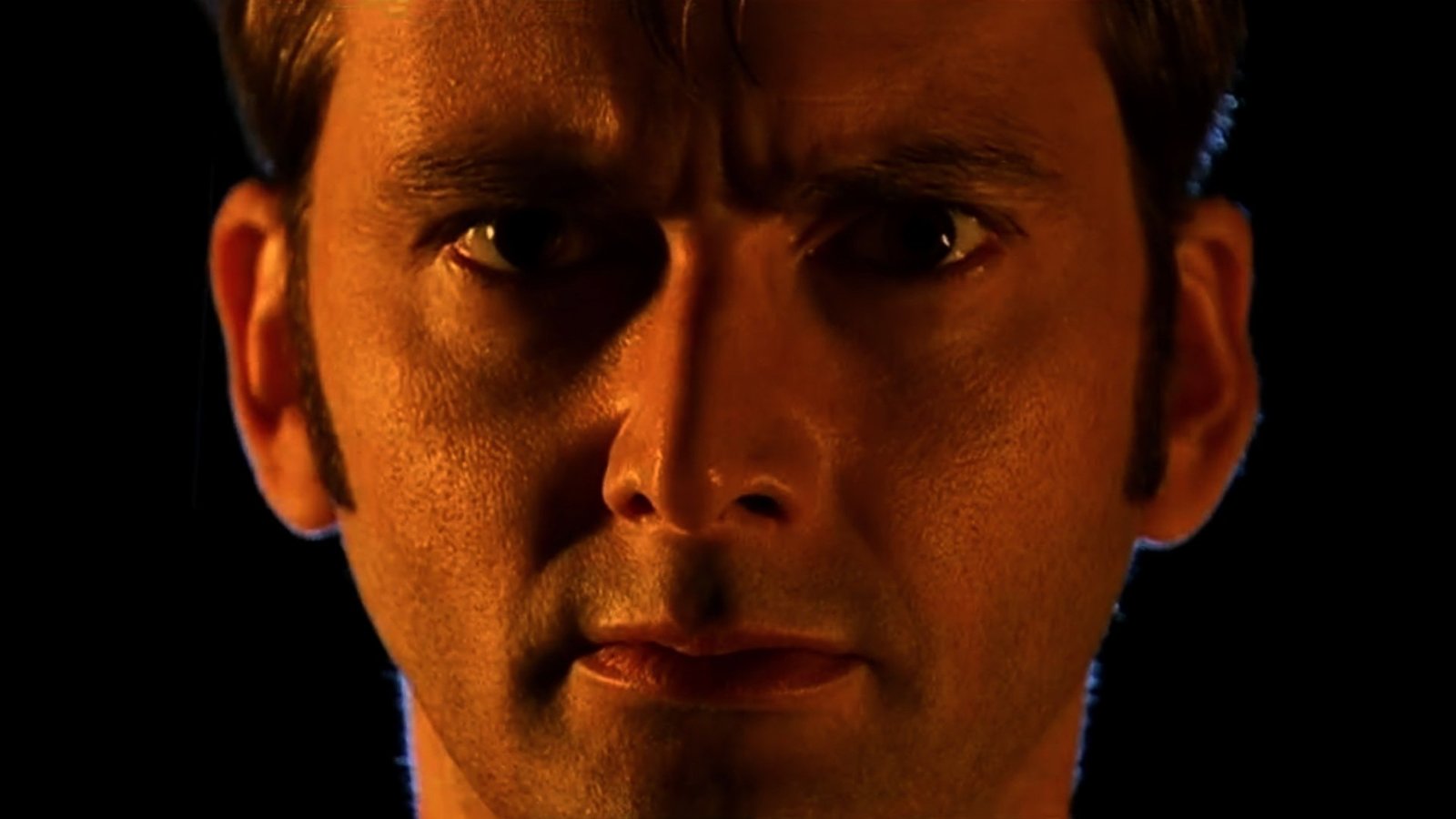
A review of The Family of Blood, the second half of the Doctor Who Series 3 two-parter that began with Human Nature. The post covers John Smith being asked to give up his human life so the Doctor can return, the schoolboys turned into soldiers, Joan and Martha’s parts in the story, and the Doctor’s punishment of the Family.
It calls the episode the best thing the show has done, praising Tennant and Jessica Hynes in the vision of the life John and Joan could have had, Joan’s refusal to go with the Doctor, and the Remembrance Day ending with an elderly Tim Latimer. Rating: 5/5.
The first half of this story asked what would happen if the Doctor became human, and this half asks the harder question, which is what happens to the human when the Doctor needs to come back. I loved it. “The Family of Blood” is the payoff to everything Human Nature set up and it’s magnificent, easily the best hour of Series 3 so far and up there with the best the show’s ever done since it came back. And in its last act it’s genuinely frightening, in a way I really wasn’t expecting.
A man who doesn’t want to die
We left John Smith being invited to choose which of two women should die, and he doesn’t get out of it by being brave. Tim opens the watch for a second, the Family are distracted, and it’s Martha who grabs a gun and gets everyone out, because John Smith isn’t a hero, he’s a schoolteacher, and the episode never lets him be anything else. Then it only gets worse. The village is under attack, the school is under siege, and the answer is the scene that’s stayed with me most, rows of boys in uniform, some of them really young, lined up with rifles and a machine gun to mow down the advancing scarecrows while the headmaster talks about duty and honour. They cut the straw men to pieces and it changes nothing, and one of the boys realises what he’s actually doing and can’t stop shaking. It’s autumn 1913, less than a year before the war, and the show’s holding up a picture of British schoolboys being taught this is glorious, and nobody has to say the word. It just sits there.

And then the heart of it. Tim Latimer brings the watch back, and John Smith’s finally told what he really is and asked to hand his whole existence over to a man he’s never met. He doesn’t want to, and honestly that’s the bit that got me. He’s terrified and furious and completely right to be, because from where he’s standing this isn’t a noble sacrifice, it’s an execution. He begs, he asks whether John Smith isn’t a good man too, whether being kind and ordinary and in love isn’t worth something, and there’s no good answer to that. Then he and Joan hold the watch together and see it, the life they might have had, a wedding, kids, work and worry and growing old, John Smith dying peacefully in bed with his family round him, a whole lifetime offered and taken back in about thirty seconds. Tennant and Jessica Hynes play it without a scrap of sentimentality and I was a wreck. He weeps. She lets him go anyway, because she’s braver than he is.
The life they could have had
Hynes is the quiet triumph of the whole story, for me anyway. Joan is nobody’s love interest, she’s a widow who’s already buried one man, who sees perfectly clearly what’s being asked of them both, and who does the necessary thing without needing to be asked twice and without once pretending it doesn’t cost her everything. He opens the watch and John Smith stops existing, and the show’s very careful never to pretend that’s anything other than a death. The whole two-parter was always going to live or die on Tennant, and this is the scene where it pays off, the moment the watch opens and the man you’ve spent two weeks with is just gone.
Martha’s part in all this is thankless and Freema Agyeman is superb in it. She spends the entire story as the only person who knows the truth and can’t tell anybody, watching the man she loves court somebody else, and then she has to be the one who walks up to him and explains that he needs to stop existing. When John Smith turns on her in his terror and says some genuinely cruel things, she takes it without flinching. Nobody in the episode ever thanks her for any of it, which I noticed, and I’m fairly sure I was meant to.
Why he was hiding
Here’s the turn that makes the whole thing. I’d assumed all along the Doctor hid because he was scared of the Family, and he wasn’t. He hid out of mercy, because he knew that if he ever turned his full attention on them he’d be merciless, and now he has. The punishments are brilliant and horrible at the same time, told like a cold fairy tale, the father bound in unbreakable chains forged in the heart of a dwarf star, the mother thrown into a collapsing galaxy, the sister trapped inside every mirror in existence, the one you catch out of the corner of your eye, and the son wrapped in chains and left standing in an English field as a scarecrow, awake, forever. They wanted to live forever and he gave them exactly that. It’s the most frightening thing this Doctor has done, and it matches what Donna saw in him at the end of The Runaway Bride, the man standing in the flames watching the Racnoss drown, who needed someone to shout at him before he’d walk away. That was a glimpse and this is the full thing, calm and eternal. He did warn us, in fairness, standing on a Sycorax ship in his dressing gown in The Christmas Invasion telling a beaten enemy he’s the sort of man who gives no second chances. It played as bravado at the time, a bit of showing off. Turns out it’s policy, from the same man who once stood in front of a Dalek fleet and chose coward over killer in The Parting of the Ways.
Joan gets the last word, and it’s the sharpest line of the season. She won’t travel with him. She looks at this stranger wearing the face of the man she loved and asks him one thing, if he’d never chosen this place on a whim, would anybody here have died? He’s got no answer and there isn’t one, and the show, for once, makes him stand still and hear it. Then the ending, which is perfect. In the trenches Tim remembers something the watch showed him and it saves his life, and in the present day an old man in a wheelchair sits at a Remembrance Day service, poppies and bowed heads, and looks up to find two figures at the back who haven’t aged a day. No dialogue and no explanation, just an old soldier and the Doctor acknowledging each other across ninety-odd years. This is what the boys with the rifles were marching toward, and the Doctor was there at the start of it.
Rating: 5/5. I absolutely loved it. Superbly written, extraordinarily acted and not afraid of its own cruelty, it gives the Doctor a real reckoning and gives Tennant his best material yet, and it’s the best thing this show has ever done. I need a minute.

2 comments
[…] the best episode of Doctor Who I’ve ever seen. Yes, I said something very close to that about The Family of Blood only last week, and I meant it, but this one’s got it beat and I’m not going to argue […]
[…] resolution offered, and the episode is better for it. Given what we watched him do to the Family in The Family of Blood, his squeamishness about soldiers is a rather more complicated position than he’d like it to […]