I round up my military SciFi picks of 2017, built from the reviews on the blog by the end of that year: the first two Warp Marine Corps books, Scalzi’s The Collapsing Empire, Terry Mixon’s The Scorched Earth and the Intergalactic Wizard Scout series. I also point back to the older favorites I still reread, Old Man’s War, Troy Rising and Empire of Bones.
The Warp Marines are the series I’d send you to first, The Collapsing Empire is the surprise, and Intergalactic Wizard Scout is the one I couldn’t finish.
These are my military SciFi picks of 2017, and it’s a short list, because it’s built from what I’d actually written up by the end of the year. I’ve done this before, back when I ranked my Kindle Unlimited reads from worst to best, but a lot has changed since then. I’m not on the subscription any more, so most of these were bought with real money, which makes me a harder critic. If a book cost $6.50 and left me shrugging, I’m going to say so. That’s a different relationship to a book than the one you have when it’s free, and I think it shows in the reviews below. I’d rather tell you a book was a miss than let you spend your own money on a hunch. If you want the earlier round, my military SciFi picks of 2016 are where this started.
There’s a mix here. Two books I’d happily press into your hands, a Scalzi that surprised me, one that got a firm yes and no, and one I gave up on. I’ve also put in a few older books that I keep going back to, because a year’s reading never really starts from zero. Where a book is part of a longer series, I only cover the books I’d reviewed by the end of 2017, so don’t read anything into what’s missing. Think of it as a snapshot of my shelf on the last day of the year, and a fairly honest one. A couple of these made me want to stay up late, and a couple made me check how many pages were left.
The Warp Marines

If you want military SciFi, the Warp Marines are where I’d send you first. Decisively Engaged hooks you right from the beginning. Humanity gets bombed back to the stone age by aliens, with clean bombs that heat a globe of force until it’s hot enough to melt steel, and the survivors build a fleet and a Marine corps so frightening they end up called Warp Demons. There’s no slow build up like you get in Honor Harrington. This one gets down and dirty from the first chapter, and the action only gets more frantic as it goes. I had to reread it before starting the newest book, because it had been too long since I’d seen my favorite Warp Marine friends, and it held up on a second go. The first time round it’s the pace that grabs you, and the second time you start to notice how much groundwork is laid for everything that follows. The aliens are a little flat, and a plot thread that felt like a Boxer Rebellion bugged me, but neither of those slowed me down much.
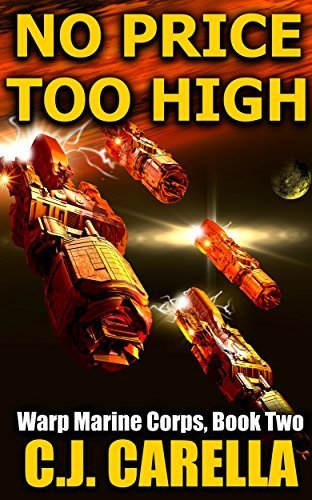
The second book is No Price Too High, and it’s the one that proved the series wasn’t a fluke. I’ve been burnt too often by authors who write a great first book and then flag in the second, and I was wary going in. I needn’t have been. The canvas goes from a single city to an entire planet, the enemy is a Starfarer nation with technology as good as ours, and there’s finally some proper starship combat, which was one of my gripes about the first book. I gave it 8.8 out of 10 and pretty much inhaled it, and it’s the book that made the series move up my list. The combat is brutal and well described, and the weapons aren’t super weapons, just gradual improvements. I also liked that it explains why Battle Mechs aren’t in prevalent use, which is sad but probably very true.
Old favorites, and a Scalzi I didn’t expect

A few older books still sit at the top of my shelf. Old Man’s War is a staple I go back to every now and then, and it’s the book that introduced me to a 75 year old signing up for a young body and a war. Troy Rising is the series I keep rereading whenever I need a pick me up, with Maple Syrup wars, a battle station built out of an asteroid and humanity triumphant. Empire of Bones is the one I wish I’d read in time for my Kindle Unlimited list, because it’s tightly paced and the characters are real. I don’t count these as 2017 picks, but I’d feel strange if I didn’t mention them. They’re also the yardstick I hold every new book up against, so if you want to know why I’m harder on some of the 2017 books than others, that’s part of it.
Then there’s The Collapsing Empire. I loved Old Man’s War, not necessarily the whole series, but definitely Book 1, and I didn’t love Red Shirts, which I thought had a brilliant concept that wasn’t executed well. So I went into the new Interdependency series a bit nervous, and I came out of it really positive. It’s basically Scalzi’s Dune, with powerful houses fighting over power and resources, an Emperox who rules from a planet called Hub, and a network of one-directional wormholes called the Flow that all routes lead through. The characters are what set it apart, and I loved Kiva’s language and acerbic wit, plus Cardenia just charmed me. My one gripe is that the Interdependency itself wouldn’t work, since humans would try to become self-sufficient on a new planet as quickly as they could, but I’m willing to give it a pass for the story. It reminded me why I keep reading him, and it’s a strong start to a new series after a stretch where I’d been worried he was losing me. If you’ve only read the Old Man’s War books, this is a good way back in.
The one with a lucky hero
The Scorched Earth is by the author of Empire of Bones, so I bought it outright now that I’m off Kindle Unlimited, and the question is whether it was worth $6.50. Without being too wishy-washy, yes and no. The idea is that the Earth is about to be bombarded by high-intensity solar radiation that acts like an EMP, and seconds before it hits, a rogue nation attacks the US, the US shoots nukes back and the whole world is screwed. Our hero Tom is a gun nut and a successful author of post-apocalyptic fiction, which means he always knows the right thing to do and has the money to buy his way out of trouble.
That’s the problem. Tom’s lucky at a gun show with an ex-army sniper, a retired IDF guy who owns a gun shop and a doctor, and he always seems to know exactly what everyone else will do. He gets the shakes after killing his first looter, then everybody’s perfectly willing to gun down anyone in their way within half an hour of the bombs dropping, which pushes belief. But the idea’s interesting, even if it feels a bit rushed, and the action sequences are the standouts that make the book. I’ll pick up book 2, though I’d like a bit more realism to their struggles. The minutiae of the different guns is a bit boring, but what they can do is interesting, and the best scenes are the ones where the group has to fight its way home with nothing but what Moshe’s shop can supply.
The one I’d skip
I’ll be honest about the last one. I’ve read a few series that start out well and then get less good over several books, and Intergalactic Wizard Scout is one of them. Richard and his wise-ass battle suit Nickelo are interesting at first, and I liked it when the book jumped from SciFi to fantasy with an elf princess, goblins and a magical talisman. But the characters become caricatures, the genius kids introduced in the second book are annoying, and I’ve been struggling with what I think is the final book for weeks. Wizard Scouts are supposed to be super soldiers who can use magic like abilities, humanity’s only bastion in an increasingly hostile universe, and that’s a great idea, but over the course of the series the writing never moves past nothing to write home about. I like it when a character levels up and takes on harder challenges, and Richard just seems stuck.
Not everything about it is bad. The phase hounds were cool, I’ll give it that, though they end up so essential to the rest of the story that it takes some of the fun out. If you’ve got the stomach for a long series that loses its way, fine, but I’d put that time into one of the books above. The series runs through Wizard Defiant, Wizard Cadet, Wizard Scout and Wizard Omega, and the one thing I’d credit it for is some unexpected personal details about Richard and his family in the third book. Still, a handful of good scenes isn’t enough to carry four books when the lead stops growing.
Which of these 2017 reads would you put at the top of your own list? Tell me in the comments.

1 comment
Writing this one up made me realize how much a short year can say about what I was in the mood for. Looking back at it now, would you have kept the one I told people to skip off the list entirely, or is a warning worth having too?