
The Time Variance Authority is a genuinely interesting concept, and it’s the first piece of MCU machinery that credibly explains how all these separate corners could eventually sit in one story. Whether that’s the intention or just a side effect, it’s the most useful thing this show does.
There’s something quietly funny about the fact that the different film universes we’ve been carrying around for years, the ones split across different studios and different rights deals, now have an in-universe framework that could account for all of them. I doubt that’s an accident.
The Infinity Stones as desk clutter
My favourite gag in the whole series, and the one that tells you exactly what kind of show this is.
Six objects that the films spent more than a decade building an entire saga around, that people died for, that wiped out half of everything, and at the TVA they’re paperweights. Kept in a drawer. An employee uses one to hold papers down because they simply don’t work here.
That’s a brilliant piece of scale-setting. In one shot the show establishes that this organisation operates so far above the events of Infinity War that the most powerful objects in the universe are office supplies. It reframes everything the films have done without saying a word about it.
Hiddleston and Owen Wilson are the show
The casting works better than it has any right to. Tom Hiddleston has been playing this character since 2011 and knows exactly where the edges are, and Owen Wilson’s Mobius is the perfect thing to bounce him off, an unflappable bureaucrat who has read Loki’s entire file and is therefore completely unimpressed by him.

They play off each other beautifully. The interrogation scenes are the best material in the series, and they work because Mobius isn’t trying to beat Loki, he’s trying to bore him into honesty. That’s a much more interesting dynamic than another villain-being-menaced sequence.
It helps that this is the 2012 Loki, the one who escapes with the Tesseract during the heist in Endgame. He hasn’t had the redemption arc yet. He’s still the character from the New York invasion, which means the show gets to do that growth again from scratch without undoing anything.
The central wound is good too: being told his whole life was written to make other people’s stories work. For a character built on believing he’s owed more, that’s the right knife.
Sylvie doesn’t quite work for me
Here’s my main reservation. It’s odd that every other Loki variant we see is male, and the single female one is Sylvie, presented as a one-off. If the premise is infinite variants across infinite timelines, there should be plenty of others, and the show never addresses why there aren’t.
The romance between the two of them is also a bit forced. I understand what the series is going for, the ultimate narcissist finally finding someone worth caring about, and that someone being a version of himself is the joke, but it doesn’t land emotionally the way it needs to for the finale to hit. It reads as a plot requirement rather than something that grew.
Sophia Di Martino is good in the part. The writing around her is where it slips.
The variant at the end
The final episode introduces someone who has been running the whole thing, and I’m not sold.
He’s interesting in the moment, mostly because the performance is committed and the monologue is well written. But he doesn’t feel strong enough or violent enough to be positioned as what comes next after Thanos. Thanos worked because he was physically overwhelming and completely certain, and you believed both. This is a talkative man in a chair who explains his reasoning at length.
My guess is he’s a Fantastic Four antagonist, or possibly an Avengers one. Either way, if the plan is to build the next arc around him, I think they could have picked a better villain. The statue at the end is an impressive image and I still came away unconvinced by the person it’s a statue of.
To be fair, that’s one episode of material. There’s time.
The bureaucracy is the best joke in it
The design work deserves its own mention, because the TVA is the most distinctive-looking thing Marvel has put on screen in years.
It is all mid-century office beige. Wood panelling, filing cabinets, forms in triplicate, waiting rooms with uncomfortable chairs. An organisation that operates outside time and controls the fate of every reality, run out of what looks like a tax office in 1975. That contrast does more comic work than most of the actual jokes, and it makes the horror underneath land harder when it arrives.
Miss Minutes is the sharpest version of this. A friendly cartoon mascot explaining, cheerfully, that your entire existence is a deviation to be corrected. It is the sort of idea that could be too cute by half and instead lands as genuinely unsettling.
The reveal that the Time-Keepers are animatronic props, and that every TVA employee is a kidnapped variant with false memories, is the season’s best turn. It reframes the whole organisation from sinister authority into something sadder: a bureaucracy of prisoners administering their own captivity.
The variant idea is doing more than it looks
The premise buried in all this is that Loki has been written as a loser to make other people’s stories work, and that is a sharper idea than the show gets credit for.
He is confronted with a file of his own life, told the ending, and shown that every apparent choice was scripted. For most characters that would be a horror-movie beat. For this one it is an accusation, because his entire personality is built on believing he is owed a greater role than the one he got. The TVA agrees with him and tells him the greater role is not coming.
Hiddleston plays that well. There is a stretch in the second episode where he stops performing entirely, and it is the most honest the character has been in ten years of screen time.
The show does not fully cash this in. It gets distracted by plot in the back half, and the existential material gives way to running down corridors. But the idea is there, and it is the reason this works as a character piece rather than only as worldbuilding.
The pacing is uneven
Fair warning if you are coming to this after WandaVision, which was tightly constructed throughout. This one sags.
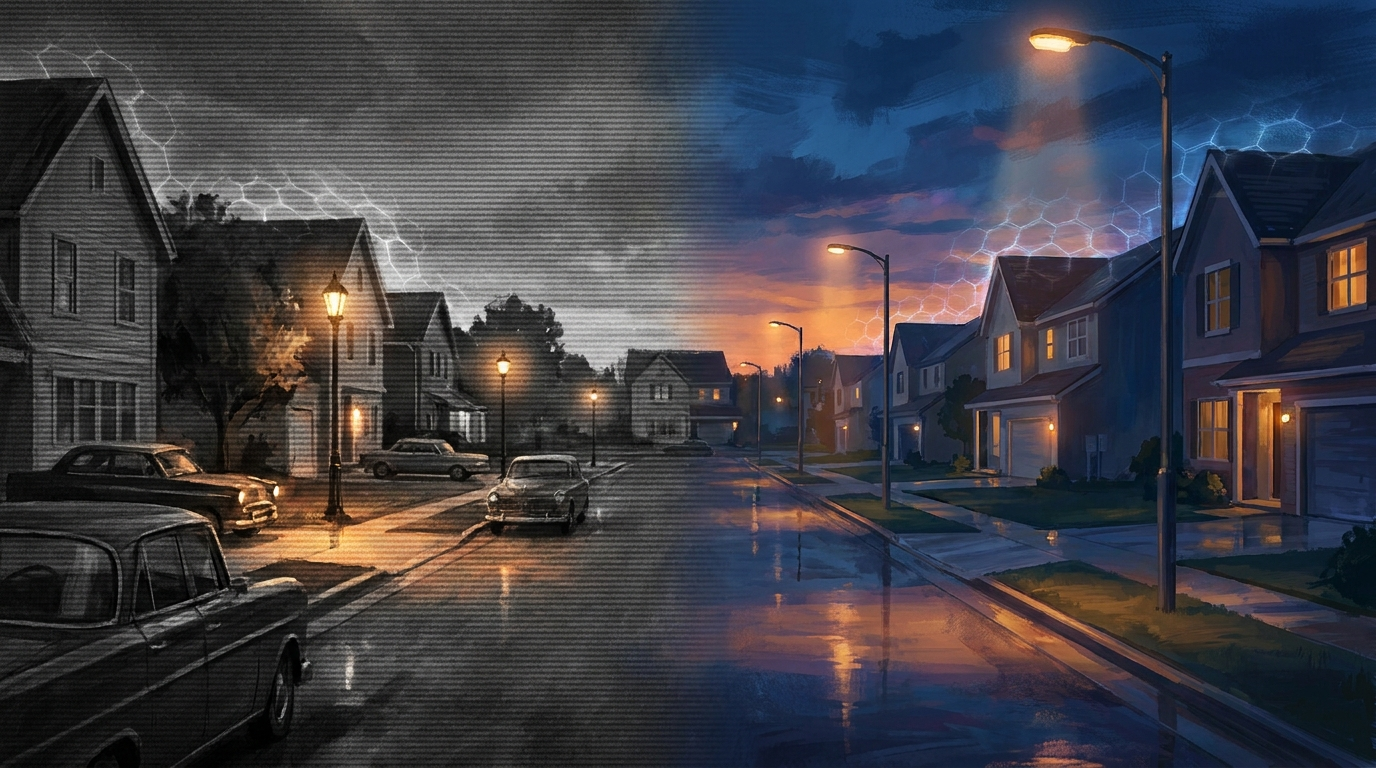
The middle stretch, particularly the apocalypse-hopping and the extended sequence on Lamentis, spends a lot of time getting two characters to trust each other and not much time advancing anything. It is pleasant enough and the performances carry it, but you can feel the season stretching four episodes’ worth of plot across six.
The first two and the last two are excellent. The middle is where I would expect people to drift.
Where it sits
Good show. Not as good as WandaVision, which had more to say and took bigger formal risks, but a more useful one for the wider franchise.
And I’ll say what I always say about Marvel television: the Netflix run set a standard that none of this has matched. Daredevil and The Punisher remain some of the most genuinely impressive things anybody has made in this universe, and Jessica Jones got there first. Those shows had weight, consequence, and a willingness to be unpleasant that the Disney+ series keep gesturing at without committing to.
Loki doesn’t reach that bar. What it does instead is give the whole enterprise a rulebook, and that turns out to be worth a lot. Whatever comes next has to work inside the framework this show just built, and for the first time in a while I genuinely don’t know what shape that’s going to be.