
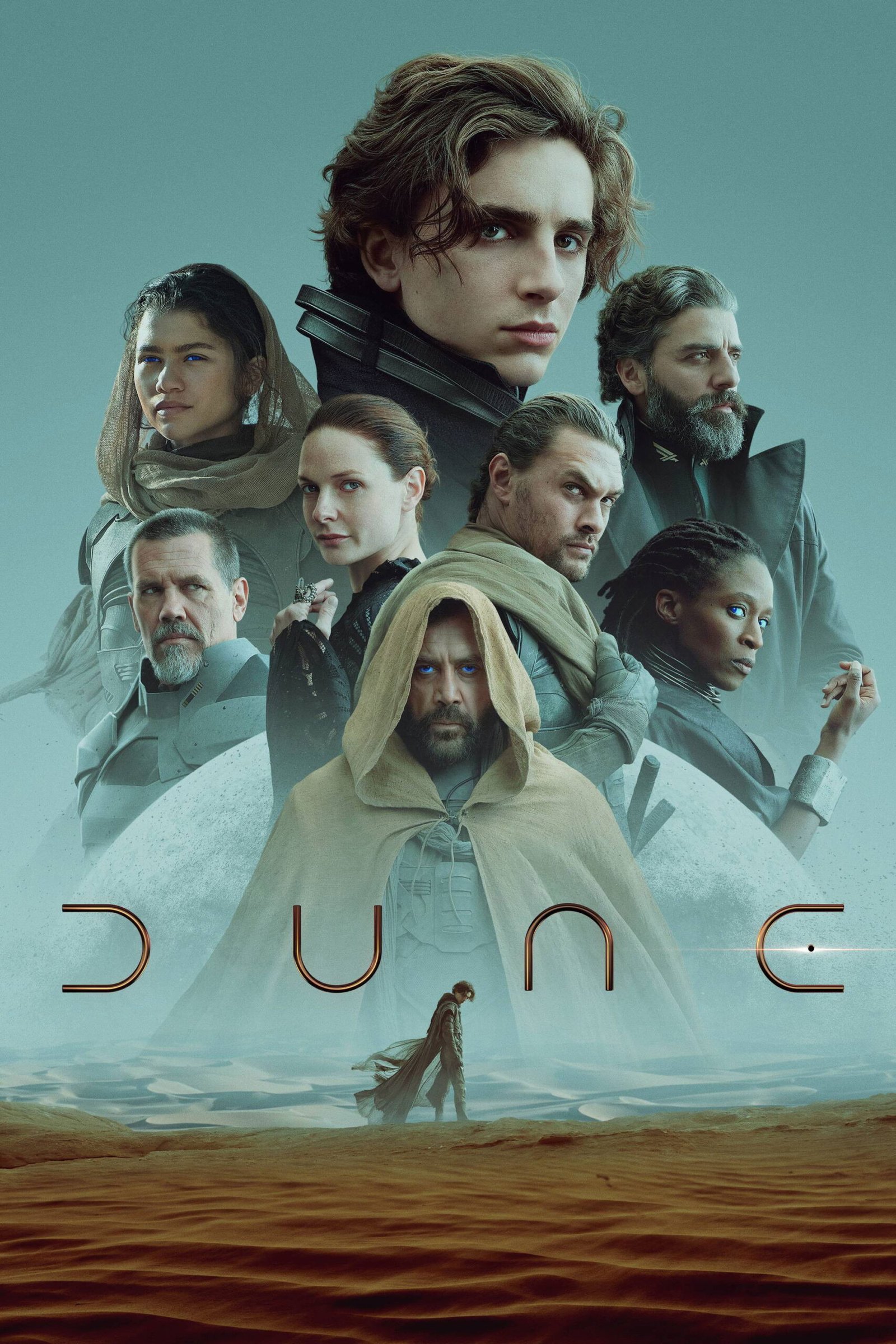
Dune Part One gave me the shivers, sitting there in the cinema, and not just the once. I loved it. Dune is one of my favourite books, and I’d been very excited about this one for a long time, the kind of excited where everybody around you knows about it whether they wanted to or not. I’d spent years with the 1984 version, which I really enjoyed, camp and all, but this is the first time I’ve watched Dune and felt like I was looking at the actual place. The scale of Arrakis, the sand and the heat haze and the size of everything against the people standing in it, the huge slab-sided buildings, the ships hanging in the air, and more than once I had the hair standing up on my arms like a kid.
It’s also only half the story, which is worth knowing going in. The film covers the first half of book one, the move to Arrakis, the Harkonnen attack, the Duke’s death and Paul and Jessica running for the deep desert, and it stops right as the Fremen take them in, with Paul’s fight against Jamis as the last big moment. Part Two has already been confirmed, so the rest of the book is on its way. Chani barely gets a look in this time, a few glimpses in Paul’s dreams and a couple of scenes at the very end, so a lot of what I’m waiting for from the book is still ahead. None of that took anything away from what’s here, and I walked out wanting the next one straight away.
Taking the whole family
I didn’t go on my own. I took the whole family along, and they came, fair play to them, because they knew this was one of my favourite books and they could tell how excited I was. That’s two and a half hours of sand, spice, noble houses, planets, prophecies and people whispering at each other in the dark, all dropped on them cold with no warning about who anybody is. So they didn’t really get it. They just didn’t have the book sitting in the back of their heads filling in the gaps the way I did, and without that a lot of Dune is people making very serious decisions about things nobody’s explained yet.
And there’s a lot to not get if you haven’t read it. Bene Gesserit, Kwisatz Haderach, mentats, the spice, the Guild, why the Emperor would hand the Atreides the most valuable planet in the universe and then help the Harkonnens take it back, the film throws all of it at you and trusts you to keep up. Even the voiceover at the very start, Chani talking about her planet and the outsiders who keep taking it, assumes you already care who the Fremen are. The film never stops to hand you a glossary either, so if a word means nothing to you, the scene just moves on without you. I’d had those words in my head for years, so every one of them landed for me, and for my family they were mostly names going past. They knew it mattered to me, though, and they sat through every minute of it with me anyway.

A universe that feels real
The thing I loved most is how they built the whole universe. The look and feel of it felt real to me in a way no Dune has before, not a set and not a special effect but somewhere people actually live and work and die. The ornithopters fly with wings that beat like a dragonfly’s, and they’re chunky and loud and look like they’d be a pain to keep running. The stillsuits have the tubes and the catch pockets and the whole idea of drinking your own recycled water right there on screen, and you believe people would wear them because they’d be dead in a day without them. Nothing looks shiny or new out on Arrakis, it’s all rusted, worn down and lived in, which is exactly how I always pictured it reading the book.
The Harkonnens get the same treatment. The Baron’s homeworld is dark and heavy and nasty, the Baron himself floats up out of a black bath, and the Sardaukar turn up looking like they came from a planet built to break people, which, if you know the book, they did. Even the shields get a look of their own, a blue shimmer that turns red when a blade goes slow enough to get through, which is exactly the rule from the book. Then there’s the first time you see a worm come up out of the sand, enormous and quiet until suddenly it isn’t. Every piece of this universe has been thought through, the tech, the buildings, the clothes, the way the sand moves, and it all adds up to a place I’d believe was out there somewhere if you told me it was.
Paul, Jessica, Leto, and the Duncan I didn’t love
The casting is mostly spot on. Timothée Chalamet is Paul, and he’s got that thing Paul has in the book where he’s young and a bit fragile at the start but you can see how clever and how dangerous he’s going to become, through the gom jabbar test, the visions, the night in the stilltent where it all lands on him and the fight with Jamis at the end. Rebecca Ferguson as Jessica is spot on too, because Jessica is doing about five things at once in every scene she’s in, protecting Paul, obeying the Bene Gesserit, loving the Duke and being terrified, and you can see all of it. Oscar Isaac as Duke Leto is just right as well, calm and decent and clearly walking into a trap with his eyes open, for the sake of his son and his house. And most of the rest of the cast land exactly where I wanted them.
The one I didn’t love was Duncan. Duncan Idaho is the Atreides swordmaster, the one who goes ahead to Arrakis to win over the Fremen, and he gets a big last stand in this film covering Paul and Jessica’s escape. I just didn’t love the choice for him, and with the rest of the casting landing so close to how I’d pictured everyone, that one stuck out more than it would have in a weaker film. He wasn’t the Duncan I had in my head from the book. It’s a small gripe in a film I loved, but it’s the one thing I’d change about it.
Rating: 5/5.

1 comment
[…] Part Two is a much more action-packed film than the first one, and I loved it. Where Part One spent a lot of its time setting up the houses, the planet and the betrayal, this one takes […]